Wednesday, April 1, 2020

India’s water wisdom in times of climate crisis


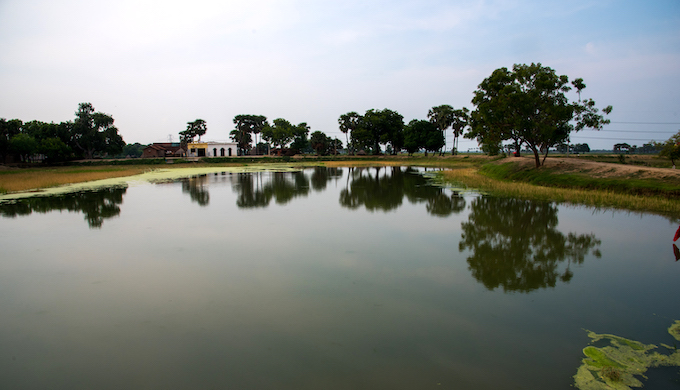
Ahar in Nawada revived by Ahar Pyne Bachao Abhiyan organised by Janhit Vikas Samiti of Bihar (All photos by Shailendra Yashwant)

The worst impacts of the unfolding climate crisis, on both people and ecosystems, will be felt through its effect on water. In India, erratic monsoons, prolonged dry spells and extreme rainfall incidents are already overwhelming its 1.3 billion citizens.

Relentless groundwater extraction, unprecedented pollution of surface water, and alienation of communities from their water resources have further compounded the water stress situation across the country.

It doesn’t have to be this way. For decades, environmentalists and social scientists have repeatedly pointed to India’s long history and diversity in water harvesting and conservation. For centuries, Indians have crafted ingenious water conservation system of all size and varieties that channel water from rivers and monsoon runoff and nearby hills and elevated areas.

The water is usually directed to storage tanks, sometimes built in a series, with overflow from one becoming runoff for the subsequent one, like Talaabs, Pokharas, Ahars, Johads, and Eris. There is a plethora of such traditional, low-cost, easy to maintain, and community-run examples of water systems all over the country.

A number of these ancient traditional water harvesting, and irrigation practices have survived the test of time and social upheavals and continue to give sustenance to communities through periods of water scarcity.

Ahar Pyne of Bihar
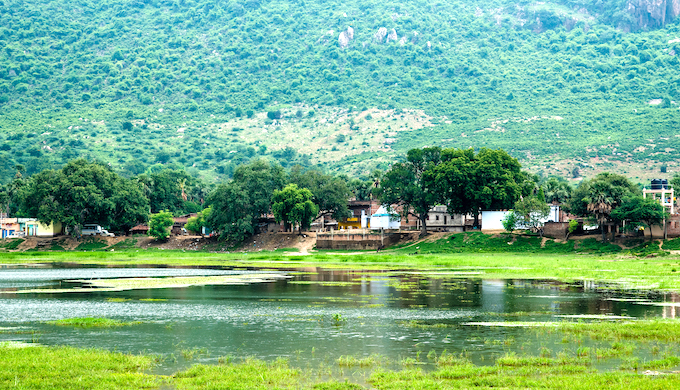
Jalsar Ahar, Siur, Nawada, Bihar. Ahars are reservoirs with an embankment on three sides while Pynes are diversion channels laid from the river or the catchment area for impounding water in the Ahars and channels
Ahar Pyne is a 5,000-year-old floodwater harvesting system that evolved during the Mauryan Empire to bring water to the undulating and rocky terrain of Magadh, in south-central Bihar. In Hindi, it means to capture rainwater in channels — Aa (to come), Har (to capture) and Pyne (water channels).

Jalsar Ahar, Siur, Nawada, Bihar. Ahars are reservoirs with an embankment on three sides while Pynes are diversion channels laid from the river or the catchment area for impounding water in the Ahars and channels.
Water supply for an Ahar comes either from natural drainage after rainfall (rainfed Ahars) or through Pynes where necessary diversion works are carried out.
Bansi Mohana Pyne, Sakri River, Bihar. Water supply for an Ahar comes either from natural drainage after rainfall (rainfed Ahars) or through Pynes, artificial channels constructed to utilise river water in agricultural fields. It is this system that made paddy cultivation possible in South Bihar, which is otherwise unsuited for this crop
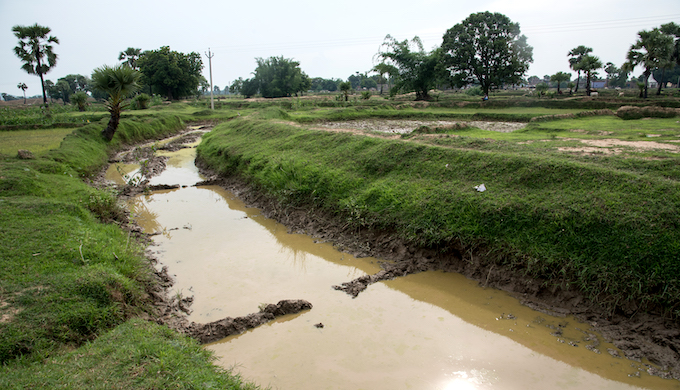
Bansi Mohana Pyne, Sakri River, Bihar. 
Water supply for an Ahar comes either from natural drainage after rainfall (rainfed Ahars) or through Pynes, artificial channels constructed to utilise river water in agricultural fields. It is this system that made paddy cultivation possible in South Bihar, which is otherwise unsuited for this crop
Water for irrigation is drawn out by opening outlets made at different heights in the embankment. It is this system that made paddy cultivation possible in south Bihar, which is otherwise unsuitable for this crop. In particular, it helped farmers meet the crucial water requirement for paddy during hathia (the grain-filling stage).

Pyne, Nawada, Bihar
Pyne, Nawada, Bihar
Pynes are constructed by considering various parameters like the slope of the terrain and the location of crops grown. To create a network of Pynes well-connected with Ahars is a labor-intensive job requiring a considerable amount of work and engineering skills. Ahar and Pyne assist in controlling floods by distributing surplus water into its system. Drought is also managed as it makes water available in the reservoir for a year.
Through this system, one Pyne can irrigate up to 400 acres. For decades, the system is not just used to collect, store, and distribute water but also hold people from various castes and classes together resulting in group action for irrigation operation and maintenance.

Farmers checking Pyne level, Nawada, Bihar
Ahar beds were also used to grow a Rabi (winter) crop after draining out the excess water that remained after Kharif (summer) cultivation. While Ahars irrigating more than 400 ha are not rare, the average area irrigated by an Ahar during the early 20th century was said to be 57 ha.
The area irrigated by the Ahar Pyne systems has witnessed a sharp decline and yet, even today, they constitute nearly three-fourths of the total irrigation facilities in south Bihar. More than 60% of these are defunct, and the rest is poorly managed.
These structures not only have relevance for sustainable water management but also have essential socioeconomic importance as it allows community participation and distribution of responsibilities simultaneously opening alternative avenues for earning a livelihood for the local population.
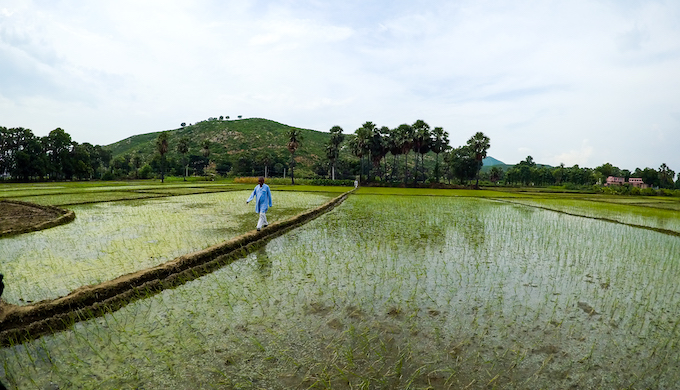
Paddy fields, Siur, Nawada, Bihar
One Pyne can irrigate up to 400 acres. It helps controls flood and drought and acts as a protecting mechanism for the villages. These channels may be of various sizes. The small ones are those found originating in Ahars and carrying the water of the Ahars to cultivable plots.
Ahar and Pyne assist in controlling floods by distributing surplus water into its system. The routine upkeep work involves cleaning and desilting of Ahar and Pyne and maintaining the water conveyance network is done by the cultivators before the onset of monsoon.

All farmers grow the same crop (paddy) all over the irrigation command around the same dates. As a result, agricultural operations undertaken by all cultivators are similar throughout the irrigation command. Since Ahars and Pynes have to be used collectively, all farmers have to synchronise their operations.

Johad of Uttar Pradesh
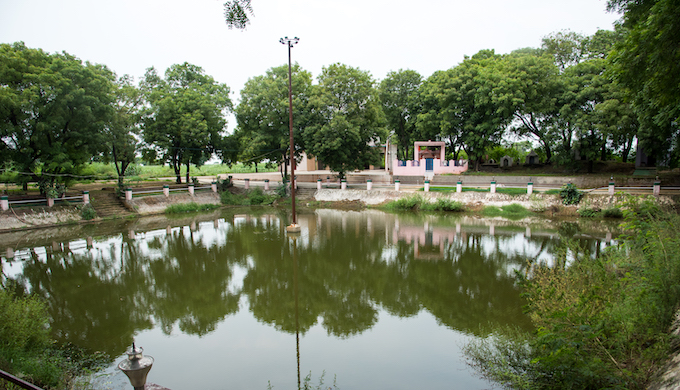
Baba Bhurewala Johad, Dhikoli, Baghpat, Uttar Pradesh revived by Development Centre for Alternative PoliciesBaba Bhurewala Johad, Dhikoli, Baghpat, Uttar Pradesh revived by Development Centre for Alternative Policies

Johad, a crescent-shaped dam of earth and rocks found in Uttar Pradesh, Haryana and the Thar desert of Rajasthan, is probably one of the oldest rainwater harvesting systems in India. Archaeologists have dated some of these rainwater storage structures in India as far back as 1500 BC.

The water collected in a Johad during the monsoon is used for irrigation, drinking, livestock and other domestic purposes while recharging the groundwater. During the dry season, when the water gradually recedes, the land inside the Johad is used for cultivation.

Typically, building a Johad involves digging a pit and shaping the excavated earth into a semi-circular mud barrier. A stone drain is sometimes set up, allowing excess water to seep into the ground or connecting it with Johads nearby. When many Johads are built in one area, they have a cumulative effect, resulting in the replenishment of whole aquifers.

The height of the dam varies from one Johad to another, depending on the site, water flow, contours of the land, etc. In some cases, to ease the water pressure, a masonry structure is added for the outlet of excess water. The water storage area varies from 2 ha to 100 ha. The villagers share the expense, supply labour, and materials like stone, sand, and lime.

Reed bed channel, Dhikoli, Baghpat, Uttar Pradesh
In the 1980s, deforestation, reduced rainfall, depleting groundwater, polluted surface water, and the failure of the modern irrigation and water supply systems brought back attention to the forgotten, decrepit and silted Johads. A mass movement for the revival of traditional methods began in Rajasthan and quickly spread to Haryana and Uttar Pradesh.

In the last 20 years, several innovations have improved the efficiency of the Johads. An initiative by New Delhi-based Development Centre for Alternative Policies (DCAP) in the Dhikoli village of Baghpat district of Uttar Pradesh stands out for replication.

In 2001, the Dhikoli block of Baghpat district of Uttar Pradesh was declared a dark zone by the Central Ground Water Board due to excessive groundwater exploitation. With no sewage system in place, the ponds in Dhikoli, like other villages in Baghpat, were overflowing with domestic sewage. DCAP’s project included an innovative reed- bed system, also known as the biofilter system, for treating wastewater before it reached the ponds.

Shamshan Johad, Dhikoli, Baghpat, Uttar Pradesh
Seven years later the villagers of Dhikoli are benefitting from the higher water table that ensures round the year water supply in their wells but also are grateful to the unique sewage treatment system that has also dealt with the menace of mosquitoes and malaria making this traditional system, that came into existence decades ago, as relevant today as it was then and perhaps even more given the water crisis and problems like water pollution, scarcity and climate change.

A 650 ft long channel — 8 ft deep and 10 ft wide — with weirs that had alternating tiny waterfalls and ditches brought the sewage water and rainwater overflow from the village drain to the lower Johad that was constructed on the panchayat owned land.

Since the project was completed and the three Johads have been able to capture around 5.5 million litres of rainwater per annum from the surrounding catchments per year, recharging the groundwater in the process. In addition, every year, 11 million litres of treated wastewater go into the newly made big Shamshan Johad. Several tube wells downstream of the Johads have also reported an increase in the water table.
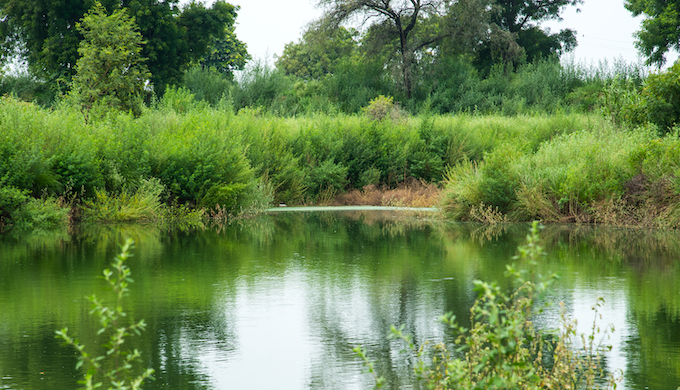
Lower Shamshan Johad, Dhikoli, Baghpat, Uttar Pradesh
The success of reviving these traditional practices illustrate the urgent need to reengage communities in water management, using simple, low-cost, traditional and highly efficient systems to ensure water security. They demonstrate how empowered communities, having access to and control over water resources, can significantly contribute to reducing poverty and inequality, and achieve prosperity.
The efforts by local communities in India to improve water availability are lauded universally. A widespread revival of these traditional practices will contribute to India attaining its Sustainable Development Goals and ensuring water security, food security, and disaster risk reduction.

Extracted from Water Wisdom in Times of Climate Crisis, published by Oxfam India for the Transboundary Rivers of South Asia (TROSA) project.
First published on Indiaclimatedialogue.

Wednesday, February 12, 2020

Tourism | Bhutan puts ecology before the economy


Putting ecology before the economy, Bhutan is going to charge regional travellers from India, Bangladesh, and the Maldives, a Sustainable Development Fee (SDF) of $16.85 (Rs 1,200) per day from July. Predictably, tourism operators on both sides of the border, that were riding high on the recent tourism boom, have expressed serious concerns about this move.

Bhutan adheres strictly to its policy of ‘high value-low impact’ tourism based on its unique Gross National Happiness (GNH) policy that is based on four principles of sustainable development, environmental conservation, preservation and promotion of cultural values, and good governance.

To achieve these goals, barring regional tourists, visitors from all other countries pay significantly higher costs, including a Sustainable Development Fee of $65 (Rs 4,650) as part of a mandatory package of minimum $250 per day which includes, visa fees, sightseeing entrance fees, meals, local transport, and accommodation. The SDF is a direct revenue contribution for the maintenance of ecology and local development in the country that is also famous for being carbon negative.

However, this "high value, low impact" strategy was failing in the last few years following a spike in the numbers of regional visitors, especially from India, that were exempt from SDF levy. Bhutan received a total of 274,097 visitors in 2018. Of the total arrivals, 202,290 were regional tourists. Indians make up the majority of these regional tourists and had sparked worries for the unique Himalayan kingdom's star attraction, its cherished ecology.

Bhutan’s biggest attraction is its natural heritage and it is a fact that tourists in large numbers, running around some of the world’s most pristine landscapes, are going to damage the ecology, resulting in a loss of flora and fauna and posing a biosecurity risk. Go to any hill station in India, from Manali to Munnar, to witness the devastation caused by Indian tourists.

In its Travel and Tourism Competitiveness Report in 2017, the World Economic Forum noted that degradation of the natural environment was having a serious effect on the tourism sector: natural capital depletes — because of overfishing, deforestation or water and air pollution — so tourism revenues decline.

UN Environment’s research has shown that the industry’s use of key resources, such as energy and water, is growing commensurately with its generation of solid waste, including marine plastic pollution, sewage, loss of biodiversity and greenhouse gas emissions.

Tourism accounts for around 8 percent of global greenhouse gas emissions, according to a new study published in the scientific journal Nature Climate Change, to quantify the industry’s total carbon footprint. The report concludes that flying less and investing in payment schemes to offset the damage caused by travel will be essential to avoid “unchecked future growth in tourism-related emissions”.

It’s quite simple, a country that has a tourism sector that both cares about the sustainability of the environment and nurtures its places of natural beauty is going to attract discerning international and local visitors who are willing to pay the extra dollar. That extra dollar can go into restoration, conservation and well-being of the local biodiversity.

For example, Rwanda’s strategy to focus on high-value/low impact responsible ecotourism, aka Gorilla Tourism, rather than mass tourism has resulted in funding for the government’s programme for the protection of gorillas. Since 2010, Rwanda is considered to be one of the safest destinations in East Africa for wildlife and biodiversity experiences.

Several studies, including one by the Nielsen and Cornell University’s Centre for Hospitality Research, have estimated that 75 percent of Millennial and Gen Z travellers would be willing to pay extra for sustainable tourism. Fifty percent of the older generation or Baby Boomers are also willing to pay more for environmentally responsible destinations.

Cox & Kings carried out a survey in India’s key cities, including Delhi, Mumbai, Chennai, Kolkata, Bangalore, Ahmedabad, and Thiruvananthapuram. About 5,000 respondents aged between 20 and 35 took part in the survey, and a whopping 87 percent of the respondents felt strongly about saving the environment.

These are encouraging trends, and may just augur well for the tourism sector.
We need carbon neutral, zero-waste, environmentally-sensitive tour packages to destinations that have environmentally-conscious, free and fair societies that value the ecosystem.

Shailendra Yashwant is a senior advisor to Climate Action Network South Asia (CANSA). Views are personal.

First published in Moneycontrol

Saturday, February 1, 2020

Budget 2020 | On climate change, it was business as usual


Presenting the Union Budget 2020-2021, Finance Minister Nirmala Sitharaman said that India’s commitment towards tackling climate change made at Paris conference will kick start from January 1, 2021.
She also referred to Prime Minister Narendra Modi’s two international initiatives in the climate change arena; namely, the Coalition for Disaster Resilient Infrastructure (CDRI) and the International Solar Alliance (ISA), which according to her will also help achieve India’s commitment to the Sendai Framework for Disaster Risk Reduction, enhance adaptation and achieve the 2030 Sustainable Development Goals (SDGs). The efforts to this end, she said, will be executed in various sectors through normal budgeting process.
Rs 4,400 crore has been allocated to give incentives to large cities (more than one million population) to formulate plans for ensuring ‘cleaner air’. The Ministry of Environment, Forests and Climate Change (MOEFCC) will notify the parameters for such incentives.
Sitharaman also announced that old thermal power plants that do not meet prescribed emission norms will be asked to close down and their land will be used for unspecified alternative purposes. She also said PM-KUSUM scheme will be expanded to help 2 million farmers in setting up standalone solar pumps. A slew of other announcements for uptake of renewable energy and organic agriculture were also referred to in her speech.
The only thing remarkable of today’s budget speech was that, ‘climate change’ found space in her over 2 hour 40 minutes long budget speech after four subsequent budget speeches (2015-16, 2016-17, 2017-18 and 2018-19) under the same government had ignored it. The last time we heard climate change referred to in a full budget speech was in first budget presented by Arun Jaitley in 2014-15.
However, today’s announcements are nothing but a lip service to climate change and the proposed incremental measures fall short in their intent to transform India into a sustainable, low-carbon, high-growth economy is disappointing.
As Nicholas Stern famously said, “Climate change is the biggest market failure the world has ever seen”, Budget 2020 with its deafening silence on budget allocations to the National Action Plan on Climate change (NAPCC) and the National Adaptation Fund, does not augur well for India’s campaign to combat climate change.
Instead of a strategy that will re-orient how we execute climate action via an economy-wide green industrialisation that puts money into low-carbon and climate-resilient sectors such as renewables, public transport, ecological restoration, what we got was yet another set of vague and unclear announcements.
“She did not recognise climate change as a major threat to people and economy, ignoring the estimates that climate change impacts could cause a reduction of 2.5 to 4.5 per cent of GDP, and did not give any indication of revising its emission reduction targets. The message to the states on old and polluting coal fired power plants is weak and advisory in nature,” said Harjeet Singh, global climate change head of Action Aid International.
“…the finance minister had no clear allocation or incentives in today’s speech on how India intends to develop resilient infrastructure, retrofit existing infrastructure for resilience, and to enable a measurable reduction in infrastructure losses, ” said Sanjay Vashist, Director of Climate Action Network South Asia.
While forest cover has been increasing in India as claimed by the MOEFCC in its recent report that will put India on track to achieve Paris Accord target of creating an additional carbon sink by increasing forest cover, the Finance Minister was silent on any further investments required for research into restoring biodiversity, conserving landscapes and preserving the natural balance of biodiversity in various parts of India.
Considering that she referred to climate change as part of the three themes woven around ‘aspirational India, economic development and caring society’, there were high expectations that the Finance Minister will go the extra mile to mainstream climate change in the design of the first budget of the decade — but it was business as usual with no real incentives to mitigate or adapt to climate crisis.
Shailendra Yashwant is senior adviser, Climate Action Network South Asia (CANSA). Twitter: @shaibaba. Views are personal.

First published in Moneycontrol

Tuesday, January 28, 2020

Budget 2020 | To fight climate change, correct anomalies in fund allocation


India, like the rest of the world, is facing an unprecedented economic and humanitarian crisis caused by climate change and environmental degradation, as is evident from the increasing intensity and recurrence of floods, droughts, extreme heat and cold, cyclones, sea level rise and an erratic monsoon.
According to a recent report by McKinsey Global Institute, climate change hazards such as extreme heat waves and humid conditions could potentially cause a reduction in India’s Gross Domestic Product (GDP) by 2.5-4.5 per cent due to decline in labour productivity and reduced working hours.
The Global Climate Risk Index 2020 says India suffered an economic loss of $37 billion due to climate change in 2018. Another study by Stanford University’s Earth System Science, measuring the effects of anthropogenic climate change on GDP per capita by country, has estimated that global warming has made the Indian economy 31 per cent smaller than it would have been otherwise.
Preliminary estimates by the Government of India indicate that around $206 billion (at 2014-15 prices) would be required between 2015 and 2030 for implementing adaption actions in key areas such as agriculture, forestry, fisheries, infrastructure, water resources and ecosystems. Beyond these, additional investments will be needed for strengthening resilience and disaster management, pegging the total funds requirement at $2.5 trillion for the 15 years.
Unfortunately, consecutive Union Budgets since 2015, under the Narendra Modi-led National Democratic Alliance (NDA) government, have failed to consider the real cost of climate change and environmental degradation. The 2019-20 Budget by Union Finance Minister Nirmala Sitharaman was hailed by the Prime Minister as a “green Budget” with a vision for “pollution free India with green Mother earth and blue skies”, but the actual budgetary allocations did not match this rhetoric, with little or no reference to climate change, mitigation, adaptation or disaster risk reduction.
As she prepares the Budget for 2020-21, Sitharaman must acknowledge the undeniable fact that anthropogenic activity is eroding human capital (education and productivity) as well as produced (infrastructure and property) and natural (air and water) capital at an unprecedented pace.
In this context, Sitharaman must prioritise and scale up fiscal action to address the unfolding climate crisis and environmental emergency by first and foremost bolstering allocations to the National Action Plan on Climate Change (NAPCC).
The NAPCC was adopted in 2008 and incorporates India’s vision for ecologically sustainable development by creating eight national missions, i.e. for deploying solar energy, enhancing energy efficiency, creation of sustainable urban habitat, conserving water, sustaining fragile Himalayan ecosystems, expanding forest cover, making agriculture sustainable and creating a strategic knowledge platform to serve all the national missions. The success of these missions is key to India’s commitment to the Paris Agreement to combat climate change and achieve its Sustainable Development Goals (SDGs).
Another area that the minister needs to urgently look at is ways to mobilise funding for natural calamities and climate-induced disasters. Collections from the National Calamity Contingent Duty -- a major contributor to the National Disaster Relief Fund (NDRF) -- have been declining, having fallen to Rs 3,660 crore in FY18, from Rs 6,450 crore in FY17.
A panel of state finance ministers is exploring whether a disaster cess/tax should be imposed nationwide to fund the NDRF, but it is well known that a cess may not be the best way for funding disaster management. According to an Indiaspend report, just 29 per cent of the clean energy cess on coal was transferred to the National Clean Energy and Environment Fund between 2010-11 and 2016. Instead, Sitharaman must find ways of provisioning for these funds in the Budget.
Finally, the finance minister must also correct the anomaly in allocation to the National Adaptation Fund. One of India’s nationally determined contributions (NDCs) under the Paris Agreement is “to better adapt to climate change by enhancing investments in development programmes in sectors vulnerable to climate change, particularly agriculture, water resources, the Himalayan region, coastal regions, health, and disaster management”.
The allocation of Rs 100 crore, a fraction of the total budget of over Rs 2,900 crore allotted to the Ministry of Environment, Forest and Climate Change (MOEFCC) in 2019-20 is woefully inadequate. Mitigation of climate change depends on the international policy, but at a national level, it is critical that we invest in adaptation to prepare our most vulnerable communities to survive and thrive.
Shailendra Yashwant is senior adviser, Climate Action Network South Asia (CANSA). Twitter: @shaibaba. Views are personal.

First published in MoneyControl

Thursday, January 9, 2020

Climate Change | 2020 is the year of climate emergency


Children at Thousand Islands of Indonesia, that are disappearing due to sea level rise.

Fear, not hope, reigned in Australia on New Year’s Day. A string of fires all the way down the South Coast region of New South Wales and Victoria are burning at emergency levels . This year’s bushfire season is widely regarded as one of the most severe on record. Since September, fires have spread across much of south-eastern Australia following a period of extreme drought and record-breaking temperatures.
At least 25 people killed and ecologists at the University of Sydney estimate more than one billion birds, reptiles and mammals in New South Wales alone are likely to have died in the rapidly spreading wildfires. Reuters reported that by January 7, the fire had expanded to 10 million hectares or “an area the size of South Korea”.
The direct cost of the fires to the Australian economy has been estimated to be at least $2 billion and rising. With summer only one-third over, the situation is likely to grow even grimmer in Australia.
Meanwhile, in Indonesia, torrential rains, which began on New Year’s Eve, set off deadly flash floods in the capital Jakarta and elsewhere on the island of Java, killing at least 66 people and sending over 173,000 residents to temporary shelters.
Jakarta is a sinking city built on swamps, riddled with punctured aquifers, clogged waterways, and weighed down by an unwieldy population that is regularly inundated by floods as sea levels rise steadily. This is why Indonesian officials are already seeking to relocate the country’s capital to East Kalimantan Province, on the island of Borneo.
However, the deluge in the first week of 2020 was the heaviest in the capital since record-keeping began in the 19th century. “This rain is not ordinary rain,” warned a statement from Indonesia’s Meteorology, Climatology and Geophysics Agency.
As always multiple factors are at play in this annual cycle of fires and floods on the Australian continent and the Indonesian archipelago, but the scale and intensity of this year’s unfolding disasters unequivocally reiterate that the link between the current extremes and anthropogenic climate change is scientifically undisputable.
If Indonesia is naturally prone to floods, Australia is naturally primed to burn. Every year there is a fire season in the summer, with hot, dry weather making it easy for blazes to start and spread.
More than a decade ago, the Intergovernmental Panel on Climate Change (IPCC) concluded that ongoing anthropogenic climate change was virtually certain to increase in intensity and frequency of fires in Australia and flooding in Indonesia. This assessment of the science evidence has been repeated in countless reports, including the IPCC’s Climate Change and Land report, released in August.
Yet neither the Australian nor Indonesian governments have announced any significant changes to their climate policies. Australia produces iron ore and a third of global coal exports and the Indonesian economy is fuelled by export of palm oil and coal. Both countries are also among the top 20 CO2 emitters.
Australian Prime Minister Scott Morrison openly promotes coal industry, which is allegedly a major funder to his party. “I am not going to write off the jobs of thousands of Australians by walking away from traditional industries,” he told Australian broadcaster Channel Seven.
Indonesian President Joko Widodo has pledged to rein in the illegal expansion of palm oil sector, the largest driver of deforestation, but at the same time in a bid to bring “development” to remote regions, he is accused of surreptitiously allowing vast tracts of peat land forests to be cleared for palm oil in the Indonesian part of Papua New Guinea.
Australian fires and Indonesian floods are merely a glimpse of a world careening irreversibly into a climate emergency that appears to be set to unfold across the planet in 2020.
As Cate Blanchett put it so succinctly at the 77th Golden Globe Awards night, “…when one country faces a climate disaster, we all face a climate disaster, so we are in it together.”
The question is if Morrison and Widodo are willing to accept that climate change is aggravating natural disasters in their own countries, that they urgently need an alternative business model to shore up their GDPs, that bold and decisive action to end coal extraction and deforestation once and for all will go a long way in helping the world survive the ongoing climate crisis.
Shailendra Yashwant is senior adviser, Climate Action Network South Asia (CANSA). Twitter: @shaibaba. Views are personal.

First published in Moneycontrol

Sunday, December 1, 2019

Phase Out Coal - Restore Hasdeo Arand


Despite adding dramatic capacity for solar and wind energy, India is not able to make the determined mindshift away from fossil fuel dependency and prevent the destruction of our last remaining forests such as Hasdeo Arand. Photo Courtesy: Alok Shukla

The Forested state of Chhattisgarh holds the key to the water security of much of Peninsular India. Managed well, it has the capacity to enhance India’s climate resilience, even as it boosts water security for millions. 
The Hasdeo Arand forest that spans about 1,70,000 hectares (ha.), in northern Chhattisgarh’s Korba and Sarguja districts, is one of the largest contiguous stretches of intact forests in India. This pristine forest is the watershed of the Hasdeo-Bango reservoir and the Hasdeo river, which is a tributary of the Mahanadi river. Rich in biodiversity, with dense sal forests, rare flora and endangered fauna, it is part of a large elephant corridor for wild elephants, moving from the Gumla district in Jharkhand to Korba in Chhattisgarh.
The Hasdeo Arand region is also home to the large and vulnerable forest-dwelling adivasi community of Gonds, 90 per cent of whom are deeply dependent on forest produce, and agriculture, for their livelihoods.
However, this rich ecosystem is under threat because of the vast coal reserves it harbours over an area of 1,878 sq. km.  A huge chunk, 1,502 sq. km., is forested. And roughly 80 per cent of this forested parcel includes good quality forest cover, with around 1,176 sq. km. sporting a canopy cover that exceeds 40 per cent and 116 sq. km. with an amazing 70 per cent canopy shield.
In 2009, India’s Ministry of Environment and Forest (MoEF) declared the Hasdeo Arand forest as a ‘No-Go Area’ for mining because of its irreplaceable forest cover and its potential to be expanded. Such ‘no-go’ areas represent 8.11 per cent of the total potential coal-bearing area in India and 11.50 per cent of the nation’s total explored coal-bearing area.
Then in 2011, three blocks on the “fringes” of the forest were granted stage-I approval for mining, against the advice of its own Forest Advisory Committee (FAC), which said that a section of the 841 hectares forest area to be diverted had “high ecological and forest value”. The then Minister made a commitment that the rest of Hasdeo Arand would continue to be inviolate, a ‘no-go’ area, while approving this unfortunate forest clearance.   But the first axe has already struck. Bulldozers and giant excavators have moved in, families have been uprooted from ancestral lands, and precious flora and fauna is being ravaged for coal.
Of the 18 coal blocks identified, mining operations are being carried out in two blocks – Parsa East and Kete Basan (PEKB), and Chotia. Proposals for mining four other coal blocks are underway at both State and Central levels.
India is emerging as a global champion for climate action. Nationally, however, despite adding dramatic capacity for solar and wind energy, we have not been able to make the determined mindshift away from investing in new fossil fuels, including coal mining capacities.
Coal mining in Hasdeo Arand will, for instance, fragment one of the last remaining contiguous forest patches in India, damage biodiversity, violate forest rights and increase human-wildlife conflict. Well-protected forests are diehard economic infrastructures that harvest and supply water, sequester carbon, prevent air pollution, mitigate floods and droughts, fill aquifers, purify river water and greatly reduce human-animal conflicts.
At a time when the global financial system is moving away from coal, it is vital to take a long-term view on protecting India’s natural capital, by preventing the public sector, including banks, from pumping money into financially risky investments. Expanding fossil fuel capacities will end up creating stranded assets. In the case of coal, when externalities including forest loss, land, air and water pollution are factored in, the investment becomes uncompetitive, particularly in light of the deflationary trends we see in the renewable energy sector.
The need of the hour is statesmanship and farsighted planning that is built on the understanding that we cannot develop as a nation unless our natural capital base is secure.

What Needs to be Done
First: Immediately stop the process of further land acquisition for coal mining and auctioning of mining rights in the forest region of Hasdeo Arand and declare the entire region as an elephant reserve.
Second: Restore landscapes damaged by faulty coal mining and make communities living next to our most productive nature reserves and ecosystems the primary beneficiaries of biodiversity regeneration.
Third: Create large-scale jobs and livelihood opportunities geared to regenerate our forests, lakes, wetlands and riverine ecosystems that sustain the quality of our air, nourish soils, produce fresh water, regulate climate and create conditions that enhance climate resilience by moderating the impact of floods and droughts.
First published in: Sanctuary Asia,Cover Story December Sanctuary Asia Part IV of VI, December 2019

Thursday, October 10, 2019

Climate Change | Sorry Greta Thunberg, the world is not ready to tackle the climate crisis


The much-hyped United Nations Climate Action Summit in New York on September 23, starring UN Secretary-General Antonio Guterres, teen climate activist Greta Thunberg, and millions of children from around the world rallying for urgent and enhanced climate action, delivered near to nothing.
In 2015, governments pledged in the Paris Agreement to attempt to keep global warming since pre-industrial times to 1.5 degrees Celsius. This requires achieving net-zero global emissions by 2050. Science shows that phasing out coal, the most polluting fossil fuel, is essential to achieving that goal. This year, Guterres asked world leaders to come to the UN with concrete plans to cut emissions to net-zero.
Instead, rich countries and large emitters such as the United States, Australia, Saudi Arabia, and Brazil brazenly ignored Guterres’ call and skipped the summit, while others practically came empty-handed to the table. Chinese President Xi Jinping’, leader of the world’s largest emitting country, sent his envoy Wang Yi with nothing but a promise to meet its Paris pledge.
Even Prime Minister Narendra Modi’s promise of installing 450 GW after 2022 was received with scepticism given India’s continued dependence on coal-fired power plants. According to BP Energy Outlook 2019, coal’s share in India’s primary energy consumption will be almost half at 48 per cent in 2040, oil’s share will be 23 per cent, and the contribution of renewables will rise fivefold to a mere 16 per cent.
Worldwide, despite the extraordinary growth of renewable energy in the last decade, the share of coal-fired powered plants continues to dominate the global energy system.
According to a report by Climate Analytics, the current and planned coal power plants globally would lead to a generation increase of 3 per cent by 2030 compared to 2010 levels. If the world follows these present trends, this would lead to cumulative emissions from coal power generation almost four times larger than what would be compatible with the Paris Agreement by 2050.
Even if all the planned and announced coal power plants would be cancelled, shelved, or converted to other fuel, the operating coal plants would exceed the Paris Agreement benchmarks by four times in 2030 and more than 20 times by 2040, highlighting the huge risk of stranded assets that the coal sector will be facing in the next decades.
The UNEP Emissions Gap Reports, aka ‘where we are likely to be and where we need to be’, current Nationally Determined Contributions (NDCs) are estimated to lower global emissions in 2030 by up to 6 GtCO2e (gigatonnes of equivalent carbon dioxide) compared to a continuation of current policies. This level of ambition needs to be increased around fivefold to align with the 1.5°C limit.
For now, levels of the main long-lived greenhouse gases, carbon dioxide (CO2), methane (CH4)) and nitrous oxide (N2O) have reached new highs. CO2 emissions grew 2 per cent and reached a record high of 37 billion tonnes of CO2 in 2018. There is still no sign of a peak in global emissions, even though they are growing slower than the global economy.
According to the UN’s Science Advisory Group, ‘the average global temperature for 2015–2019 is on track to be the warmest of any equivalent period on record’. The Intergovernmental Panel on Climate Change (IPCC) is of the view that ‘warming and changes in ocean chemistry are already disrupting species throughout the ocean food web, with impacts on marine ecosystems and people that depend on them.’ It also noted that ‘if current trends continue wildfires and heat waves would sweep across the planet annually, and the interplay between drought and flooding and temperature would mean that the world’s food supply would become dramatically less secure.
The IPCC’s Special Report on Global Warming of 1.5° clearly states that, “avoiding that scale of suffering, requires such a thorough transformation of the world’s economy, agriculture, and culture that “there is no documented historical precedent.”
Scientists believe that “this is not physically impossible” but as Thunberg and Guterres discovered, the world is nowhere near ready to tackle the climate crisis on the basis of science. Not yet.

First Published on Sep 26, 2019 in Moneycontrol

Plastic Ban | Single-use plastic has no place on this planet

In 2018, as the global host to UN World Environment Day, India had promised to phase out single-use plastic (SUP) by 2022 with the theme ‘Beat Plastic Pollution’. During the UN Environment Assembly meeting held in Nairobi, in March, India piloted a resolution on phasing out SUP by 2022, a deadline later updated to 2025.

Earlier this month, Prime Minister Narendra Modi, at the United Nations Conference on Desertification said, “I think the time has come for the world to say goodbye to single use plastic,” reiterating his government’s intention to phase out SUP. As if on cue, the plastic industry went in to protest mode, raising the usual bogey of threats to the livelihoods of plastic industry workers and how ‘businesses will find themselves stuck with proscribed equipment and will have to incur additional costs to replace old machinery’ at a time of ‘economic slump and slowdown’. We are told about how SUP is actually a very small percentage of plastic waste that is littering our landscapes and finally, we are told that plastic is not a problem, instead, we should improve India’s ill-managed waste management systems.
Even former environment minister of the Congress-led United Progressive Alliance (UPA), Jairam Ramesh, took the opportunity to tweet, "As Environment Minister I resisted blanket ban on the use of single-use plastic. Plastic industry employs lakhs and the real problem is how we dispose and recycle waste.”
If Modi’s most recent pronouncement was yet another test balloon, the government was quick to pull it back down. Union Environment Minister Prakash Javadekar clarified at a press conference that “there is no imminent ban on the use of single-use plastic in India, that the “Prime Minister Narendra Modi didn't say ‘ban’, but said 'goodbye’ to SUP waste. From October 2, we will begin an attempt to collect all that waste. Nearly 10,000 tonnes of plastic waste remains uncollected,” he pointed out.
SUP are commonly used for plastic packaging and include items such as plastic bags, food packaging, bottles, straws, containers, cups and cutlery, intended to be used only once before they are thrown away or recycled.
According to a UNEP 2018 report, 79 per cent of the plastic waste ever produced now sits in landfills, dumps or in the environment, while about 12 per cent has been incinerated and only 9 per cent has been recycled. In Europe alone, the estimated costs for cleaning shores and beaches reach €630 million per year (European Commission 2015).
According to PlastIndia Foundation, a conglomeration of associations and institutions that deal in plastic, India consumes an estimated 16.5 million tonnes, about 1.6 million trucks full of plastic annually. Of this, 43 per cent is plastic manufactured for single-use packaging material.
About 80 per cent of the total plastic produced in India is discarded immediately and will find its way to landfills, drains, rivers and flow into the sea. Currently, the country is able to recycle only about 4 million tonnes of its plastic waste. A recent study by Thiruvananthapuram-based NGO Thanal estimated that there was 1,057 tonnes of plastic litter present along the beaches of Kerala.
The plastic industry in India is estimated to grow to 22 million tonnes (MT) a year by 2020 and nearly half of this is SUP, according to a Federation of Indian Chambers of Commerce and Industry (FICCI) study.
Imagine 11 million tonnes of SUP waste being added to the already existing mountains of plastic waste every year. There are no studies available about the overall economic impact of plastic pollution but a study by Asia-Pacific Economic Cooperation (APEC) estimated a $1.3 billion economic impact of marine plastics to the tourism, fishing and shipping industries in that region alone.
It is indeed true that banning SUPs today will hurt a large part of existing investments in machinery and impact jobs in the plastics industry but future costs of removing all single-use plastics accumulating in the environment will most certainly be higher than the costs of allowing this polluting industry to grow today. The solution to India’s problems with plastic waste should be addressed by ensuring sustained effort to cut down consumption and investing in the recycling sector. SUP has no place on this planet.
First Published on Sep 16, 2019 in MoneyControl.


Friday, July 12, 2019

WhatsApp messages from Bhutan save lives in Assam

Bhutan’s Sarbhang Chu river is called the Saralbhanga after it crosses into India to meet the Brahmaputra river


In the last few weeks of June 2019, a series of WhatsApp messages were sent from Bhutan to India to warn “cross-border friends” downstream of the Aai, Saralbhanga and Manas rivers about cloud-bursts, swollen rivers and possible flash floods affecting people in the Indian state of Assam.

Although originating from officials, these messages were not sent via official channels. That would involve the dzongdag – the administrative head of the dzonkhag, or district – in Geluphu passing information to the officials in Bhutan’s capital Thimphu, who would then inform officials in New Delhi, the capital of India. They would, in turn, inform officials in Guwahati, the capital of the Indian state of Assam, who would pass the warnings on to Kokrajhar district headquarters. In the final stage, these messages would be relayed from there to villages along the India-Bhutan border.
In most cases this circuitous channel would take too long, with information either critically delayed or unclear, and of little use to most river bank communities in downstream Assam.

Now, though, the communities are relying on these “WhatsApp early warnings” routed through members of Bhutan-India Friendship Association (BIFA) to friends in NGOs like the North East Research & Social Work Networking (NERSWN), who pass the information to their network. Messages are forwarded within minutes, giving the villagers precious lead-time to prepare and escape the wrath of the suddenly rising rivers.

“It is difficult to predict when the flash floods will occur. In case of water released from dams the Bhutanese government sends early warning to New Delhi but even then some times, by the time we receive the information and pass it onto villages along the border it is too late. The challenge is lack of communication infrastructure in the area. There are no cell towers on the Indian side and most villagers on the border surreptitiously use Bhutanese SIM cards. Those WhatsApp messages probably save lives of hundreds,” said Kamal Kishor Hazarika, project officer at the District Disaster Management Authority (DDMA) in Kokrajhar.

“It’s costly, using internet, but for emergency all the villagers depend on WhatsApp,” agreed Aniram Basumatary of Saralpara village, while speaking to thethirdpole.net. “Communication is important, especially in monsoon season. Anything can happen, and getting advance warning will help us to be ready. We have suffered enough because of lack of warning.”

Decades of militancy in this corner of India has led to a complex situation, where communications infrastructure is seen as both a threat and an opportunity, making it a politically challenging decision to strengthen communications in the area.

The cost of no warning

Manas river in spate, near Geluphu. Bhutan

Manas river in spate, near Geluphu. Bhutan [image by : Shailendra Yashwant]

Banglajhora is a small village on the banks of Saralbhanga river in Kokrajhar district of Assam. The village faced three devastating floods in 2012, 2014 and then again in 2016. Since then, every monsoon the fear of floods is palpable among its residents, who belong to the Bodo indigenous community.

Satyaraj Narzary recalled the floods of July 16, 2012, “When I woke up in the morning, there was no water. Nor were there any signs of flood. But around 8 a.m., the water started rising and before we realised what was happening, the whole area was flooded. About 10-12 houses were washed away. Many families lost their cattle in the floods, their standing crop of paddy was destroyed and considerable amount of land was lost due to erosion. We have not been able to farm on that land ever since.” He said that the floods happened following heavy rains in the foothills of Bhutan when the Saralbhanga river broke a temporary embankment.

In August 2014 Banglajhora was inundated again without warning, when the gushing waters of Saralbhanga eroded the Saralpara-Patgaon bund and several hectares of paddy and private properties in the area were destroyed. The local residents had to take shelter at a relief camp for over a week.

The floods of 2016 were the worst. Heavy rains caused flash floods in most of the tributaries of the Brahmaputra. Nearly 1.8 million people were affected in 22 districts across Assam. Lower (western) Assam’s Kokrajhar and Bongaigaon districts were the worst affected, and the villagers of Banglajhora faced the brunt of it all.

Kamal Basumatari at Banglajhora village in Kokrajhar [image by: Shailendra Yashwant]

Kamal Basumatari at Banglajhora village in Kokrajhar [image by: Shailendra Yashwant]

“We had to run with our children and the few belongings we were able to gather. One contingent of the Army rescue team was deployed to rescue us with lifeboats but the force of water was such that the first lifeboat turned turtle in the middle of the river and the villagers ended up rescuing the soldiers,” said Kamal Basumatari.

“After that we made a raft with few tyre tubes and bamboo to ferry women, children and a few belongings across the river with great difficulty. I have never seen Saralbhanga so furious. The water was also very cold,” he added.

WhatsApp for disaster warning

“Floods, both riverine and flash floods, are the most common hazards in the Hindu Kush Himalayas and account for 17% of people killed and 51% of the damage. Unlike riverine floods, flash floods occur rapidly with a very short lead time for warning. They can arise following intense rainfall events, or as a result of breaching of natural dams formed by landslides or from glacial lakes formed behind end moraine dams (glacial lake outburst flood or GLOF),” Neera Shreshta Pradhan of the International Centre for Integrated Mountain development told thethirdpole.net.

“In recent years, increasingly erratic and unpredictable monsoon rainfall patterns and increased climate variability have led to severe and frequent flood disasters in the region. There may be some information sharing between governments on major rivers, but tributaries are largely ignored. This is where social relations between transboundary communities are critical for any early warning systems to deliver. Clear and timely communication, proper functional network and preparedness reduces human casualties. Even a short lead time will save lives,” she added

“Bhutan is in a high rainfall zone but in the last 15-20 years, there have been more and more cloudbursts, resulting in severe flash floods that destroy everything in their path with alarming regularity in Bhutan and then downriver in Assam. The floods of July 2016 in Saralbhanga river wiped out the entire Sarpang town in South Bhutan before unleashing havoc in Assam. Bhutanese experts have said that this is due to climate change and is in line with IPCC reports,” said Kripaljyoti Mazumder, state project officer at the Assam State Disaster Management Authority (ASDMA)

While the Bhutanese have responded by building mitigating structures and preparing their populations, the downstream communities along the border in India can only hope for timely information, seamless evacuation and minimum damage to their homes, cattle and crops.

NERSWN staff and volunteers standing around a table meeting to address building early warning networks

Building early warning networks, NERSWN staff and volunteers at Banglajhora village [image by: Shailendra Yashwant]

For this the key elements of disaster risk reduction like risk knowledge, monitoring, analysis, warning generation, dissemination and communication of warning and preparedness for timely response have to work in sync.

“Getting timely early warning is not enough; the preparedness of the communities is important as well. Already NERSWN has begun a Hazard Risk Vulnerability Assessment (HRVA) mapping of the river basin villages and identified volunteers in all villages to ensure that the early warnings from our friends in Bhutan reach the last mile families, even those who do not have access to WhatsApp or mobile phones,” said Raju Narzary of NERSWN.

“Already this year, the WhatsApp warnings from BIFA to the last mile family has travelled within 10 minutes of being sent out. The delay was due to the fact that the last family ran out of phone batteries, so when we didn’t see the ticks going blue, I borrowed a motorcycle to alert the family. Mobile phones are warning systems but you need motorcycle for sure, as there are always those without mobile phones,” said Aniram Basumatary, who does not own a motorcycle but is saving up for one.

Kokrajhar call for action

Building on these relationships between BIFA and NERSWN, 14 civil society organisations from Bhutan and India, including the Bhutan Transparency Initiative and Aaranyak – a leading NGO in Assam – under the stewardship of Oxfam India’s Transboundary Rivers of South Asia (TROSA) programme came together on June 20-21, 2019 in Kokrajhar. These consultations were designed to strengthen people-to-people ties, and help safeguard the rights of riparian communities upstream and downstream by supporting community-led cross-border ecosystem management and conservation practices.

former prime minister of Bhutan, Kinzang Dorji  standing on a podium

Kinzang Dorji, former Prime Minister of Bhutan, addressing the two-day conference on “Transboundary cooperation for effective management of water risks between Bhutan and India” [image by: Shailendra Yashwant]

 “The biggest threat to peace is lack of effective management of our water resources, especially along our borders. Some of the poorest people live on transboundary waters of little known tributaries in remote parts of the Indo-Bhutan region, easily the most vulnerable to vagaries of climate change unfolding in these parts. Awareness, empathy, people-to-people networks supported by appropriate technologies, and timely and quality early warning information will go a long way in reducing risks to these communities,” said Pankaj Anand, programme director of Oxfam India, during his inaugural address.

“Early warning is the moral responsibility of people living upstream towards people living downstream. What you are seeing in Kokrajhar district goes beyond the official friendly ties between Bhutan and India. In fact this informal but friendly collaboration for early warning and sharing of our water resources between border communities of Bhutan and Assam is a model for peaceful relationships between countries at a time when peace around the world is threatened by the scarcity of water and climate change induced disasters,” said Kinzang Dorji, who served twice as Prime Minister of Bhutan, and is now the chairperson of the Bhutan Transparency Initiative.

First published on The Third Pole - Click here

Wednesday, June 12, 2019

India experiments with turning ocean plastic into roads


he early morning bustle at Sakthikulangara harbour in Kollam is much like any other on Kerala’s coast. Thousands of tonnes of fish landed by hundreds of boats are being sorted, cleaned and auctioned. But something novel is happening. Each vessel is offloading salvaged waste that crews disentangle from their nets. The plastic will be mixed with bitumen to make roads.

“It is disgusting what we find at the bottom of the sea,” says S Raghu, captain of the Holy Star, which has just hauled in about 30 kilos of waste. “The garbage is competing with the fish.”

Our appeal to people is to stop using and discarding plastic like there is no tomorrow.

Peter Mathias, president of the All Kerala Fishing Boat Operators Association, says the fishers pledged to bring back the waste from their operations and whatever is caught in the nets.

The plastic waste is then collected by Suchitwa Sagaram (Clean Seas), a Kerala government initiative launched in 2017, and cleaned and shredded  in a special facility. Suchitwa Mission, Kerala’s flagship waste management programme, helped pay for the shredding machine and six months of costs.

Clean Seas staff move washed marine waste for drying, to be used to make plastic roads in india
Clean Seas staff carry washed marine waste. (Image: Shailendra Yashwant)

By late February, almost 16 metric tonnes of plastic had been shredded and 145 kilogrammes of plastic bottles had been pressed into bales. But despite the programme’s success, its future is uncertain, largely because of a lack of funds and limited market opportunities.

“More and more road contractors are shying away from using the waste material, citing technical difficulties in melting and mixing it with their road-building material,” says Sudhakaran, the coordinator of the programme in Kollam. “We need to think about other alternatives to recycle the shredded waste.”

Staff sort and shred plastic waste, to be used to make plastic roads in india
Shredding and sorting plastic waste (Image: Shailendra Yashwant)

Are plastic roads a dead end?

It was after a series of pilot projects in Chennai that a number of Indian cities and villages began blending roads out of 92% bitumen and 8% recycled plastic.

Clean Kerala Company (CKS) sources and distributes shredded plastics for road building. So far 15 tonnes of plastic shreds have made it into about nine kilometres of road across the state, mostly for short stretches inside villages. About 1.7 metric tonnes of plastic is needed per kilometre.

Advocates claim that roads built with plastic waste are more resilient to searing heat, but environmentalists have raised concerns. They point to the release of highly toxic dioxins when the plastic is melted, and the risk of leaching and bioaccumulation of microplastics in soil, especially on poorly build roads.

“There is scant research on this aspect, hence it would be wise to take a precautionary approach before adopting such technologies on a large scale,” says Dharmesh Shah of Global Alliance Against Incineration.

Plastic roads may not be economic as it is expensive to separate polymers suitable for road construction from a mix of several. (The Indian Roads Congress only recommend polyurethane, polyethylene terephthalate and low- and high-density polyethylene.)

“We have to clean the oceans. We have to find a solution to the garbage. So far plastic roads are the only available option,” says Abhilash Pillai, assistant engineer of the local government’s Harbour Engineering Department, Kollam. “There is no limit to the plastic waste out there in the seas, on the land. We have a huge task ahead and it’s an emergency.”

Shredded plastic, used to make plastic roads in india
Shreds of hope? (Image: Shailendra Yashwant)

“Plastic roads are not a solution,” says Shibu Nair of NGO Thanal, who has spearheaded the zero-waste movement in Kerala for almost two decades. “You are hiding your plastic waste for some time and converting all your roads into toxic land.”

He says that neither the Harbour Engineering Department nor the Fisheries Department have a clear institutional mechanism to manage and protect the environment. “That is why the programme is running on an ad hoc basis,” he says. “We cannot leave those fishermen and women to market forces.”

“If plastic roads are going to be an environmental problem in the future then we need another solution,” says Peter Mathias. “Our fishermen are underwriting the clean-up operations. We desperately need fresh ideas and an infusion of funds for this programme to make a difference.”

Without funds and new markets for the salvaged plastic waste, the fate of this pioneering programme in Kollam hangs in the balance, as do ambitious plans to expand it to other ports.

pressed plastic bottles, used to make plastic roads in india
Bales of bottles (Image: Shailendra Yashwant)

The cost of plastics

Kerala Suchitwa Mission estimates that the state produces 480 tonnes of plastic waste per day. Some of this finds its way into rivers and into the sea.

A UN Environment Programme study found that 311 million tonnes of plastic was produced globally in 2014. It estimated that in 2010, 4.8 to 12.7 million metric tonnes found its way into the ocean. Sunlight then degrades it into microplastics that are mistaken for food by aquatic life and seabirds, damaging internal organs. Millions of birds, turtles, fish and other species are affected.

“Even if every plastic ban on the planet was fully successful, we still have millions of tonnes of historical waste that needs to be dealt with safely and permanently. Unfortunately, all the current practices – poorly regulated landfills, waste-to-energy plants, recycling plastic into pellets, plastic roads etc – all have failed and will lead to more harm than help,” says Shibu Nair.

To end the cycle of plastic pollution for good, the recycling industry is focusing on upcycling, prevention and interception of microplastics, as well as negating the need for plastic – such as by using corn starch or hemp for packaging.

“We hope that the next generation will completely reject plastics and find a new alternative,” says Shiny S, an employee of Clean Seas at the Kollam harbour. “For now, our appeal to people is to stop using and discarding plastic like there is no tomorrow.”

Ocean plastic roads, plastic roads, making roads from plastic
Mendes Joseph of Clean Seas delivers a marine litter bag to fishers at Sakthikulangara harbour. (Image: Shailendra Yashwant)

 First published on China Dialogue Ocean - Click here

Wednesday, May 15, 2019

Red river turns black in North East India


Children crossing the flood-impacted barren paddy fields of North Lakhimpur

Children crossing the flood-impacted barren paddy fields of North Lakhimpur, on Rongali Bihu day

Ranganadi means red river. But the Ranganadi red river of India ran black and turbid on Rongali Bihu, the Assamese New Year’s Day, this April.

The people living along the banks of the river in North Lakhimpur district of Assam could not bathe their livestock in Ranganadi on this special day. Forced to forego a tradition among the Mising tribe to which they belong, residents bathed their cattle and goats in water pumped up from tube wells, ignoring the dangerous level of arsenic in the groundwater.

Red river of India

On February 9 this year, an unprecedented amount of silt and muddy water was released from the Ranganadi dam of North Eastern Electric Power Corporation (NEEPCO)’s 405 MW Ranganadi Hydro Electric Project (RHEP) near Yazali in Arunachal Pradesh.

A major tributary of the Brahmaputra, Ranganadi starts in the Nilam, Marta and Tapo mountain ranges of Arunachal Pradesh, a state in which the river is called Panyor. It is a major source of irrigation water and fish in both Arunachal Pradesh and downstream Assam, where it joins the Brahmaputra.

Shortly after the sudden release of silt by NEEPCO, scores of dead fish of different species and sizes were seen “lying at the bank of the river at Lichi, Upper Sher, Lower Sher, Boda, Upper Jumi and Komasiki village areas,” according to a statement by local NGO Jumi, Komasiki, Cher Green Plus Society (JKCGPS). The NGO has lodged a complaint to the police against the head of RHEP, holding him responsible for the destruction of aquatic lives. It has also threatened to launch a movement.

Bisan Narah showing the high concentration of silt in the red river of India with her hands

Bisan Narah shows the concentration of silt in the Ranganadi water since February

The amount of silt flowing down the Ranganadi seemed unusual even for 74-year-old Bisan Narah of Shantipur village downstream. “Although the dam releases silt from time to time for maintenance, this time the silt and contaminants are really thick in the water.  That Ranganadi dam is like the government’s curse upon our people. In monsoons the floods have worsened because of the dam, in winter the river dries up because of the dam. Our paddy fields are affected by the floods and now there is no fish in the river. The water is unusable for even washing anything.”
Ranganadi dam at Yazali, responsible for turning the red river of India black

Ranganadi dam at Yazali, Arunachal Pradesh

When RHEP became operational in 2001, it was hailed as the first run-of-the-river project in North East India, which would produce electricity without impounding water and displacing people.

But several academics in Assam have since documented that that the channelling of the river’s water through a tunnel on the adjacent hillside has dried up the riverbed the entire length of the channel, effectively stopping the movement of all aquatic life up and down the river, except in the monsoon when the torrential rain common in the area still leads to the river breaking its banks. Guwahati-based environment researcher Mirza Zulfiqur Rahman describes them as “run-away-with-the-river” projects.

As with all hydroelectric projects, RHEP engineers have to get rid of the silt before the water hits the turbine blades – the silt would ruin the blades otherwise. So the water is led to a settlement chamber from which the silt is periodically flushed out and dumped on the riverbed below the dam. It was this dump that was flushed out on February 9 by opening the dam gates. The result is a river that still flows black and turbid.

Women Water Users’ Groups

Women Water Users’ Group of Joinpur Village in a meeting

Women Water Users’ Group of Joinpur Village in a meeting [image by: Shailendra Yashwant]

There are many traditional new year’s day festivities slated for the day, but it is also a holiday, so there is a meeting of the local Women Water Users’ Group (WWUG) convened by the Transboundary Rivers of South Asia (TROSA) programme of the NGO Oxfam in Joinpur village, a stone’s throw from the recently rebuilt embankments that are supposed to protect the village from rising waters of the Ranganadi during the flood season.

Recalling the incidents that led to the current predicament, the women recount how the RHEP was scheduled for complete shutdown for maintenance earlier this year and had indeed communicated the same to the local authorities, who in turn passed on the information to local communities.

Downstream community organisations like JKGPS in Arunachal Pradesh and many other representatives from the WWUGs in Assam demanded that before shutdown NEEPCO must select a site for dumping the silt.

NEEPCO promised a delegation of NGOs that it would not release silt but on the night of February 9,  the state-owned company opened the dam gates releasing massive amounts of silt into the river downstream.

“Did you know that in its shutdown circular, NEEPCO said that it will ‘not take any responsibility for any loss/damage to life and property etc. in case of any accident owing to violation of the notice.’ What kind of company is this, and what kind of government allows them to get away with it?” asked Rachna Padun, President of Joarkhat village WWUG. There were many groups at the meeting.

Barnali Taid sits next to what was her paddy farm and is now a permanent pond due to siltation from floods, near her house in Joinpur

Barnali Taid sits next to what was her paddy farm and is now a permanent pond due to siltation from floods, near her house in Joinpur

“They cannot blame everything on climate change and unpredictable weather. Everyone here knows that the floods are caused by release of excess water during peak monsoon season by the dam. When they do, the water comes with really great force, greater than the normal rise of the river during monsoon. Last year 11 houses in our villages were washed away because the force of water breached the embankments. But no one took any responsibility,” said Barnali Taid , WWUG’s water champion from Jurkha Dambigual village.

After last year’s floods that killed 11 people, the outrage against the dam forced NEEPCO to make a statement, claiming that the situation would have been much worse without the dam. The claim has been contested by scientists and downstream communities alike.

Aruna Das pointing to where the embankment breached during the floods of 2017 in Joinpur, North Lakhimpur, Assam [image by: Shailendra Yashwant]

Aruna Das points out where the embankment breached during the floods of 2017 in Joinpur, North Lakhimpur, Assam

“We haven’t had a chance to rehabilitate our rice farms that are destroyed in successive floods. We seem to be building and rebuilding every year and all the dam does is make some electricity that we will never benefit from,” said Aruna Das, an Aanganwadi (government-run creche) teacher and survivor of the 2017 floods that washed away her house and all their belongings. “We don’t have any factories, so we now grow one crop of rice and a few vegetables. Many farmers have tried pisciculture, but the floods level it all, even the fish farm tanks, year after year. That dam has made our lives impossible.”

“We are supposed to trust these embankments, but they have breached time and time again. The force of water when dam releases it together with the rains is too much for the embankments,” she pointed out.

“What is the point of making electricity, when there is no water to drink or food to eat and when we are living in the constant fear of our houses being washed away?” asked Barnali Taid. “The least they can do is to give us an early warning. Everyone knows that the floods are caused by the dam. The dam authorities should alert us before they release the water, so we have time to react, at least take our children and cattle to higher ground.”

The new embankment on the Ranganadi river near Joinpur

The new embankment on the Ranganadi river near Joinpur

Women seek role in decision making

At the Joinpur meeting, the WWUGs prepared a charter of demands that they wish to present to the district commissioner, with whom they are seeking an appointment to appraise him of their problems.

Clean drinking water tops the list, in a region severely affected by arsenic contamination of groundwater. That is followed by a long list of dam-induced problems for which they seek redressal – clean-up of the river from the ongoing contamination, an early warning system in the flood season, reparations for agricultural and fisheries losses to floods and inclusion of women in dam, floods and embankment maintenance related meetings at the district level.

After more animated talk, the women decided to reiterate the last demand in the introduction. “Women’s water related work is invisible in the current water paradigm though women are primary victims of degradation of nature and water scarcity,” said Gita Rani Bhattacharya, director of the Mahila Samata Society of Assam. “Water entitlements, water technology and infrastructure and voice or decision making in the water related institutions are mostly vested in men.”

“There are hardly any men in the villages, as all the young and able bodied have migrated out for work due to failure of agriculture and fishing here in Lakhimpur. Clearly there is a need to empower women to participate in water related decision-making,” said Vinuthna Patibandla, Oxfam India’s programme officer. “As part of the TROSA programme, we have formed Women Water Users’ Groups in 21 villages. They are an integral part of the village development management committee of the Panchayat, and interacts with district officials on matters relating to water governance.”

While leaving the meeting, Aruna Das asked a question that is on everyone’s mind but rarely expressed. “If these are the difficulties due to one small dam on Ranganadi, what will happen when a much bigger dam, the 2,000-megawatt dam on the Subansiri river, is made operational?”

Barnali Taid is quick to respond, “First let the women take control of this situation. Then we will deal with the big dam.” Everyone giggles at the phrase “take control” as they disperse to resume new year celebrations.


Continue reading the full article.. click here

Tuesday, October 9, 2018

The Kerala Floods: Will The Last Words Ever Spoken Be Why? Why? Why?


"This year, we have seen the terrible flooding in Kerala in India, savage wildfires in California and Canada, and dramatic warming in the Arctic that is affecting weather patterns across the northern hemisphere. The trend is clear. The past 19 years included 18 of the warmest years on record, and greenhouse gas concentrations in the atmosphere continue to rise.” – UN Secretary-General Antonio Guterres.

In August 2018, Kerala experienced once-in-a-lifetime rainfall of 2,378 mm. over 88 days, four times more than normal. The Indian Met Department (IMD) pegged the rainfall in the first  20 days of August at 164 per cent above normal.

Almost all 41 west-flowing rivers originating in the Western Ghats were in spate. The reservoirs of all 82 dams on these rivers were at maximum capacity by August 10, 2018.  Shutters of 54 dams had to be opened by August 21, and the gates of 35 out of these 54 dams were opened for the first time in history.

The rivers already filled to the brims, broke their banks with the release of reservoir water and swept everything in their path – roads, bridges, vehicles, buildings and humans.

The iconic Idukki dam and its reservoir received 811 mm. of rain and when the controversial Muallaperiyar dam began to overflow into the Idukki reservoir, all five gates had to be opened for the first time in 26 years. The resultant trail of destruction from Cheruthoni to Aluva, forced authorities to shut down the Kochi airport. Paddy fields and entire villages in the 900 sq. km. delta of Kuttanad, the backwaters of Vembananad lake, some lying two to three meters below sea level, were completely submerged.

The human casualty was terrible. According to the Kerala government, one-sixth of the total population of the state was directly affected by the floods and its collateral impact. As of September 7, 2018, the death count was 483, with 14 missing. Over a million people were evacuated and are only now, slowly, returning to their homes and their lives.

Continue reading this report on Sanctuary Asia website.