Thursday, October 10, 2019

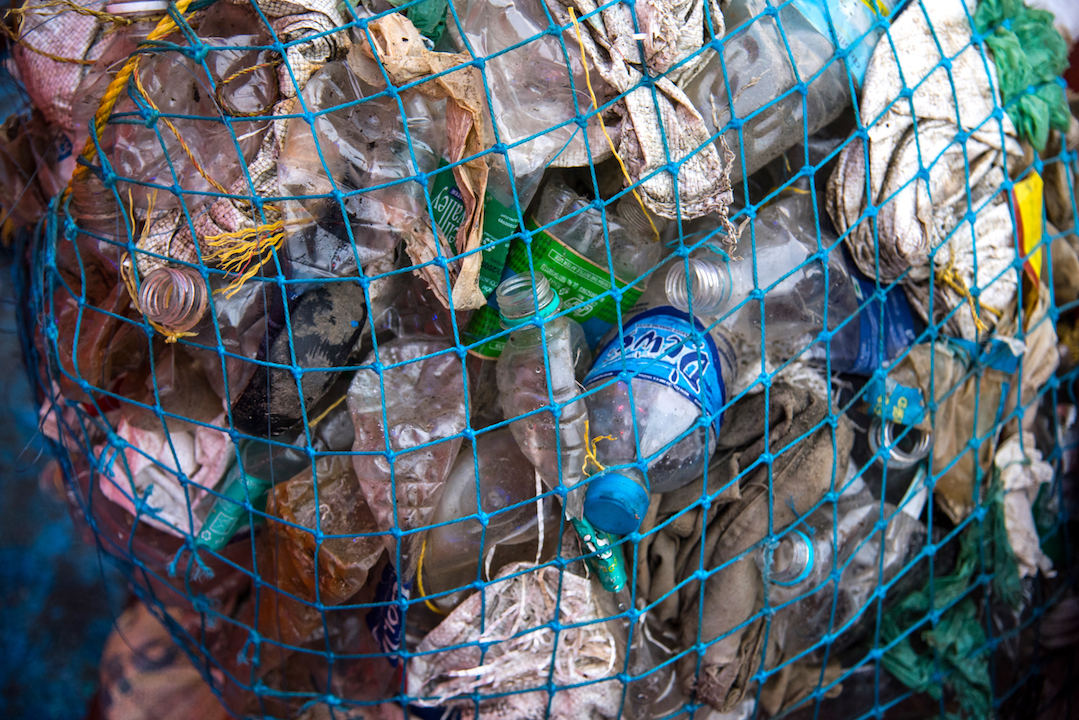
Plastic Ban | Single-use plastic has no place on this planet

In 2018, as the global host to UN World Environment Day, India had promised to phase out single-use plastic (SUP) by 2022 with the theme ‘Beat Plastic Pollution’. During the UN Environment Assembly meeting held in Nairobi, in March, India piloted a resolution on phasing out SUP by 2022, a deadline later updated to 2025.

Earlier this month, Prime Minister Narendra Modi, at the United Nations Conference on Desertification said, “I think the time has come for the world to say goodbye to single use plastic,” reiterating his government’s intention to phase out SUP. As if on cue, the plastic industry went in to protest mode, raising the usual bogey of threats to the livelihoods of plastic industry workers and how ‘businesses will find themselves stuck with proscribed equipment and will have to incur additional costs to replace old machinery’ at a time of ‘economic slump and slowdown’. We are told about how SUP is actually a very small percentage of plastic waste that is littering our landscapes and finally, we are told that plastic is not a problem, instead, we should improve India’s ill-managed waste management systems.
Even former environment minister of the Congress-led United Progressive Alliance (UPA), Jairam Ramesh, took the opportunity to tweet, "As Environment Minister I resisted blanket ban on the use of single-use plastic. Plastic industry employs lakhs and the real problem is how we dispose and recycle waste.”
If Modi’s most recent pronouncement was yet another test balloon, the government was quick to pull it back down. Union Environment Minister Prakash Javadekar clarified at a press conference that “there is no imminent ban on the use of single-use plastic in India, that the “Prime Minister Narendra Modi didn't say ‘ban’, but said 'goodbye’ to SUP waste. From October 2, we will begin an attempt to collect all that waste. Nearly 10,000 tonnes of plastic waste remains uncollected,” he pointed out.
SUP are commonly used for plastic packaging and include items such as plastic bags, food packaging, bottles, straws, containers, cups and cutlery, intended to be used only once before they are thrown away or recycled.
According to a UNEP 2018 report, 79 per cent of the plastic waste ever produced now sits in landfills, dumps or in the environment, while about 12 per cent has been incinerated and only 9 per cent has been recycled. In Europe alone, the estimated costs for cleaning shores and beaches reach €630 million per year (European Commission 2015).
According to PlastIndia Foundation, a conglomeration of associations and institutions that deal in plastic, India consumes an estimated 16.5 million tonnes, about 1.6 million trucks full of plastic annually. Of this, 43 per cent is plastic manufactured for single-use packaging material.
About 80 per cent of the total plastic produced in India is discarded immediately and will find its way to landfills, drains, rivers and flow into the sea. Currently, the country is able to recycle only about 4 million tonnes of its plastic waste. A recent study by Thiruvananthapuram-based NGO Thanal estimated that there was 1,057 tonnes of plastic litter present along the beaches of Kerala.
The plastic industry in India is estimated to grow to 22 million tonnes (MT) a year by 2020 and nearly half of this is SUP, according to a Federation of Indian Chambers of Commerce and Industry (FICCI) study.
Imagine 11 million tonnes of SUP waste being added to the already existing mountains of plastic waste every year. There are no studies available about the overall economic impact of plastic pollution but a study by Asia-Pacific Economic Cooperation (APEC) estimated a $1.3 billion economic impact of marine plastics to the tourism, fishing and shipping industries in that region alone.
It is indeed true that banning SUPs today will hurt a large part of existing investments in machinery and impact jobs in the plastics industry but future costs of removing all single-use plastics accumulating in the environment will most certainly be higher than the costs of allowing this polluting industry to grow today. The solution to India’s problems with plastic waste should be addressed by ensuring sustained effort to cut down consumption and investing in the recycling sector. SUP has no place on this planet.
First Published on Sep 16, 2019 in MoneyControl.


Friday, July 12, 2019

WhatsApp messages from Bhutan save lives in Assam

Bhutan’s Sarbhang Chu river is called the Saralbhanga after it crosses into India to meet the Brahmaputra river


In the last few weeks of June 2019, a series of WhatsApp messages were sent from Bhutan to India to warn “cross-border friends” downstream of the Aai, Saralbhanga and Manas rivers about cloud-bursts, swollen rivers and possible flash floods affecting people in the Indian state of Assam.

Although originating from officials, these messages were not sent via official channels. That would involve the dzongdag – the administrative head of the dzonkhag, or district – in Geluphu passing information to the officials in Bhutan’s capital Thimphu, who would then inform officials in New Delhi, the capital of India. They would, in turn, inform officials in Guwahati, the capital of the Indian state of Assam, who would pass the warnings on to Kokrajhar district headquarters. In the final stage, these messages would be relayed from there to villages along the India-Bhutan border.
In most cases this circuitous channel would take too long, with information either critically delayed or unclear, and of little use to most river bank communities in downstream Assam.

Now, though, the communities are relying on these “WhatsApp early warnings” routed through members of Bhutan-India Friendship Association (BIFA) to friends in NGOs like the North East Research & Social Work Networking (NERSWN), who pass the information to their network. Messages are forwarded within minutes, giving the villagers precious lead-time to prepare and escape the wrath of the suddenly rising rivers.

“It is difficult to predict when the flash floods will occur. In case of water released from dams the Bhutanese government sends early warning to New Delhi but even then some times, by the time we receive the information and pass it onto villages along the border it is too late. The challenge is lack of communication infrastructure in the area. There are no cell towers on the Indian side and most villagers on the border surreptitiously use Bhutanese SIM cards. Those WhatsApp messages probably save lives of hundreds,” said Kamal Kishor Hazarika, project officer at the District Disaster Management Authority (DDMA) in Kokrajhar.

“It’s costly, using internet, but for emergency all the villagers depend on WhatsApp,” agreed Aniram Basumatary of Saralpara village, while speaking to thethirdpole.net. “Communication is important, especially in monsoon season. Anything can happen, and getting advance warning will help us to be ready. We have suffered enough because of lack of warning.”

Decades of militancy in this corner of India has led to a complex situation, where communications infrastructure is seen as both a threat and an opportunity, making it a politically challenging decision to strengthen communications in the area.

The cost of no warning

Manas river in spate, near Geluphu. Bhutan

Manas river in spate, near Geluphu. Bhutan [image by : Shailendra Yashwant]

Banglajhora is a small village on the banks of Saralbhanga river in Kokrajhar district of Assam. The village faced three devastating floods in 2012, 2014 and then again in 2016. Since then, every monsoon the fear of floods is palpable among its residents, who belong to the Bodo indigenous community.

Satyaraj Narzary recalled the floods of July 16, 2012, “When I woke up in the morning, there was no water. Nor were there any signs of flood. But around 8 a.m., the water started rising and before we realised what was happening, the whole area was flooded. About 10-12 houses were washed away. Many families lost their cattle in the floods, their standing crop of paddy was destroyed and considerable amount of land was lost due to erosion. We have not been able to farm on that land ever since.” He said that the floods happened following heavy rains in the foothills of Bhutan when the Saralbhanga river broke a temporary embankment.

In August 2014 Banglajhora was inundated again without warning, when the gushing waters of Saralbhanga eroded the Saralpara-Patgaon bund and several hectares of paddy and private properties in the area were destroyed. The local residents had to take shelter at a relief camp for over a week.

The floods of 2016 were the worst. Heavy rains caused flash floods in most of the tributaries of the Brahmaputra. Nearly 1.8 million people were affected in 22 districts across Assam. Lower (western) Assam’s Kokrajhar and Bongaigaon districts were the worst affected, and the villagers of Banglajhora faced the brunt of it all.

Kamal Basumatari at Banglajhora village in Kokrajhar [image by: Shailendra Yashwant]

Kamal Basumatari at Banglajhora village in Kokrajhar [image by: Shailendra Yashwant]

“We had to run with our children and the few belongings we were able to gather. One contingent of the Army rescue team was deployed to rescue us with lifeboats but the force of water was such that the first lifeboat turned turtle in the middle of the river and the villagers ended up rescuing the soldiers,” said Kamal Basumatari.

“After that we made a raft with few tyre tubes and bamboo to ferry women, children and a few belongings across the river with great difficulty. I have never seen Saralbhanga so furious. The water was also very cold,” he added.

WhatsApp for disaster warning

“Floods, both riverine and flash floods, are the most common hazards in the Hindu Kush Himalayas and account for 17% of people killed and 51% of the damage. Unlike riverine floods, flash floods occur rapidly with a very short lead time for warning. They can arise following intense rainfall events, or as a result of breaching of natural dams formed by landslides or from glacial lakes formed behind end moraine dams (glacial lake outburst flood or GLOF),” Neera Shreshta Pradhan of the International Centre for Integrated Mountain development told thethirdpole.net.

“In recent years, increasingly erratic and unpredictable monsoon rainfall patterns and increased climate variability have led to severe and frequent flood disasters in the region. There may be some information sharing between governments on major rivers, but tributaries are largely ignored. This is where social relations between transboundary communities are critical for any early warning systems to deliver. Clear and timely communication, proper functional network and preparedness reduces human casualties. Even a short lead time will save lives,” she added

“Bhutan is in a high rainfall zone but in the last 15-20 years, there have been more and more cloudbursts, resulting in severe flash floods that destroy everything in their path with alarming regularity in Bhutan and then downriver in Assam. The floods of July 2016 in Saralbhanga river wiped out the entire Sarpang town in South Bhutan before unleashing havoc in Assam. Bhutanese experts have said that this is due to climate change and is in line with IPCC reports,” said Kripaljyoti Mazumder, state project officer at the Assam State Disaster Management Authority (ASDMA)

While the Bhutanese have responded by building mitigating structures and preparing their populations, the downstream communities along the border in India can only hope for timely information, seamless evacuation and minimum damage to their homes, cattle and crops.

NERSWN staff and volunteers standing around a table meeting to address building early warning networks

Building early warning networks, NERSWN staff and volunteers at Banglajhora village [image by: Shailendra Yashwant]

For this the key elements of disaster risk reduction like risk knowledge, monitoring, analysis, warning generation, dissemination and communication of warning and preparedness for timely response have to work in sync.

“Getting timely early warning is not enough; the preparedness of the communities is important as well. Already NERSWN has begun a Hazard Risk Vulnerability Assessment (HRVA) mapping of the river basin villages and identified volunteers in all villages to ensure that the early warnings from our friends in Bhutan reach the last mile families, even those who do not have access to WhatsApp or mobile phones,” said Raju Narzary of NERSWN.

“Already this year, the WhatsApp warnings from BIFA to the last mile family has travelled within 10 minutes of being sent out. The delay was due to the fact that the last family ran out of phone batteries, so when we didn’t see the ticks going blue, I borrowed a motorcycle to alert the family. Mobile phones are warning systems but you need motorcycle for sure, as there are always those without mobile phones,” said Aniram Basumatary, who does not own a motorcycle but is saving up for one.

Kokrajhar call for action

Building on these relationships between BIFA and NERSWN, 14 civil society organisations from Bhutan and India, including the Bhutan Transparency Initiative and Aaranyak – a leading NGO in Assam – under the stewardship of Oxfam India’s Transboundary Rivers of South Asia (TROSA) programme came together on June 20-21, 2019 in Kokrajhar. These consultations were designed to strengthen people-to-people ties, and help safeguard the rights of riparian communities upstream and downstream by supporting community-led cross-border ecosystem management and conservation practices.

former prime minister of Bhutan, Kinzang Dorji  standing on a podium

Kinzang Dorji, former Prime Minister of Bhutan, addressing the two-day conference on “Transboundary cooperation for effective management of water risks between Bhutan and India” [image by: Shailendra Yashwant]

 “The biggest threat to peace is lack of effective management of our water resources, especially along our borders. Some of the poorest people live on transboundary waters of little known tributaries in remote parts of the Indo-Bhutan region, easily the most vulnerable to vagaries of climate change unfolding in these parts. Awareness, empathy, people-to-people networks supported by appropriate technologies, and timely and quality early warning information will go a long way in reducing risks to these communities,” said Pankaj Anand, programme director of Oxfam India, during his inaugural address.

“Early warning is the moral responsibility of people living upstream towards people living downstream. What you are seeing in Kokrajhar district goes beyond the official friendly ties between Bhutan and India. In fact this informal but friendly collaboration for early warning and sharing of our water resources between border communities of Bhutan and Assam is a model for peaceful relationships between countries at a time when peace around the world is threatened by the scarcity of water and climate change induced disasters,” said Kinzang Dorji, who served twice as Prime Minister of Bhutan, and is now the chairperson of the Bhutan Transparency Initiative.

First published on The Third Pole - Click here

Wednesday, June 12, 2019

India experiments with turning ocean plastic into roads


he early morning bustle at Sakthikulangara harbour in Kollam is much like any other on Kerala’s coast. Thousands of tonnes of fish landed by hundreds of boats are being sorted, cleaned and auctioned. But something novel is happening. Each vessel is offloading salvaged waste that crews disentangle from their nets. The plastic will be mixed with bitumen to make roads.

“It is disgusting what we find at the bottom of the sea,” says S Raghu, captain of the Holy Star, which has just hauled in about 30 kilos of waste. “The garbage is competing with the fish.”

Our appeal to people is to stop using and discarding plastic like there is no tomorrow.

Peter Mathias, president of the All Kerala Fishing Boat Operators Association, says the fishers pledged to bring back the waste from their operations and whatever is caught in the nets.

The plastic waste is then collected by Suchitwa Sagaram (Clean Seas), a Kerala government initiative launched in 2017, and cleaned and shredded  in a special facility. Suchitwa Mission, Kerala’s flagship waste management programme, helped pay for the shredding machine and six months of costs.

Clean Seas staff move washed marine waste for drying, to be used to make plastic roads in india
Clean Seas staff carry washed marine waste. (Image: Shailendra Yashwant)

By late February, almost 16 metric tonnes of plastic had been shredded and 145 kilogrammes of plastic bottles had been pressed into bales. But despite the programme’s success, its future is uncertain, largely because of a lack of funds and limited market opportunities.

“More and more road contractors are shying away from using the waste material, citing technical difficulties in melting and mixing it with their road-building material,” says Sudhakaran, the coordinator of the programme in Kollam. “We need to think about other alternatives to recycle the shredded waste.”

Staff sort and shred plastic waste, to be used to make plastic roads in india
Shredding and sorting plastic waste (Image: Shailendra Yashwant)

Are plastic roads a dead end?

It was after a series of pilot projects in Chennai that a number of Indian cities and villages began blending roads out of 92% bitumen and 8% recycled plastic.

Clean Kerala Company (CKS) sources and distributes shredded plastics for road building. So far 15 tonnes of plastic shreds have made it into about nine kilometres of road across the state, mostly for short stretches inside villages. About 1.7 metric tonnes of plastic is needed per kilometre.

Advocates claim that roads built with plastic waste are more resilient to searing heat, but environmentalists have raised concerns. They point to the release of highly toxic dioxins when the plastic is melted, and the risk of leaching and bioaccumulation of microplastics in soil, especially on poorly build roads.

“There is scant research on this aspect, hence it would be wise to take a precautionary approach before adopting such technologies on a large scale,” says Dharmesh Shah of Global Alliance Against Incineration.

Plastic roads may not be economic as it is expensive to separate polymers suitable for road construction from a mix of several. (The Indian Roads Congress only recommend polyurethane, polyethylene terephthalate and low- and high-density polyethylene.)

“We have to clean the oceans. We have to find a solution to the garbage. So far plastic roads are the only available option,” says Abhilash Pillai, assistant engineer of the local government’s Harbour Engineering Department, Kollam. “There is no limit to the plastic waste out there in the seas, on the land. We have a huge task ahead and it’s an emergency.”

Shredded plastic, used to make plastic roads in india
Shreds of hope? (Image: Shailendra Yashwant)

“Plastic roads are not a solution,” says Shibu Nair of NGO Thanal, who has spearheaded the zero-waste movement in Kerala for almost two decades. “You are hiding your plastic waste for some time and converting all your roads into toxic land.”

He says that neither the Harbour Engineering Department nor the Fisheries Department have a clear institutional mechanism to manage and protect the environment. “That is why the programme is running on an ad hoc basis,” he says. “We cannot leave those fishermen and women to market forces.”

“If plastic roads are going to be an environmental problem in the future then we need another solution,” says Peter Mathias. “Our fishermen are underwriting the clean-up operations. We desperately need fresh ideas and an infusion of funds for this programme to make a difference.”

Without funds and new markets for the salvaged plastic waste, the fate of this pioneering programme in Kollam hangs in the balance, as do ambitious plans to expand it to other ports.

pressed plastic bottles, used to make plastic roads in india
Bales of bottles (Image: Shailendra Yashwant)

The cost of plastics

Kerala Suchitwa Mission estimates that the state produces 480 tonnes of plastic waste per day. Some of this finds its way into rivers and into the sea.

A UN Environment Programme study found that 311 million tonnes of plastic was produced globally in 2014. It estimated that in 2010, 4.8 to 12.7 million metric tonnes found its way into the ocean. Sunlight then degrades it into microplastics that are mistaken for food by aquatic life and seabirds, damaging internal organs. Millions of birds, turtles, fish and other species are affected.

“Even if every plastic ban on the planet was fully successful, we still have millions of tonnes of historical waste that needs to be dealt with safely and permanently. Unfortunately, all the current practices – poorly regulated landfills, waste-to-energy plants, recycling plastic into pellets, plastic roads etc – all have failed and will lead to more harm than help,” says Shibu Nair.

To end the cycle of plastic pollution for good, the recycling industry is focusing on upcycling, prevention and interception of microplastics, as well as negating the need for plastic – such as by using corn starch or hemp for packaging.

“We hope that the next generation will completely reject plastics and find a new alternative,” says Shiny S, an employee of Clean Seas at the Kollam harbour. “For now, our appeal to people is to stop using and discarding plastic like there is no tomorrow.”

Ocean plastic roads, plastic roads, making roads from plastic
Mendes Joseph of Clean Seas delivers a marine litter bag to fishers at Sakthikulangara harbour. (Image: Shailendra Yashwant)

 First published on China Dialogue Ocean - Click here

Wednesday, May 15, 2019

Red river turns black in North East India


Children crossing the flood-impacted barren paddy fields of North Lakhimpur

Children crossing the flood-impacted barren paddy fields of North Lakhimpur, on Rongali Bihu day

Ranganadi means red river. But the Ranganadi red river of India ran black and turbid on Rongali Bihu, the Assamese New Year’s Day, this April.

The people living along the banks of the river in North Lakhimpur district of Assam could not bathe their livestock in Ranganadi on this special day. Forced to forego a tradition among the Mising tribe to which they belong, residents bathed their cattle and goats in water pumped up from tube wells, ignoring the dangerous level of arsenic in the groundwater.

Red river of India

On February 9 this year, an unprecedented amount of silt and muddy water was released from the Ranganadi dam of North Eastern Electric Power Corporation (NEEPCO)’s 405 MW Ranganadi Hydro Electric Project (RHEP) near Yazali in Arunachal Pradesh.

A major tributary of the Brahmaputra, Ranganadi starts in the Nilam, Marta and Tapo mountain ranges of Arunachal Pradesh, a state in which the river is called Panyor. It is a major source of irrigation water and fish in both Arunachal Pradesh and downstream Assam, where it joins the Brahmaputra.

Shortly after the sudden release of silt by NEEPCO, scores of dead fish of different species and sizes were seen “lying at the bank of the river at Lichi, Upper Sher, Lower Sher, Boda, Upper Jumi and Komasiki village areas,” according to a statement by local NGO Jumi, Komasiki, Cher Green Plus Society (JKCGPS). The NGO has lodged a complaint to the police against the head of RHEP, holding him responsible for the destruction of aquatic lives. It has also threatened to launch a movement.

Bisan Narah showing the high concentration of silt in the red river of India with her hands

Bisan Narah shows the concentration of silt in the Ranganadi water since February

The amount of silt flowing down the Ranganadi seemed unusual even for 74-year-old Bisan Narah of Shantipur village downstream. “Although the dam releases silt from time to time for maintenance, this time the silt and contaminants are really thick in the water.  That Ranganadi dam is like the government’s curse upon our people. In monsoons the floods have worsened because of the dam, in winter the river dries up because of the dam. Our paddy fields are affected by the floods and now there is no fish in the river. The water is unusable for even washing anything.”
Ranganadi dam at Yazali, responsible for turning the red river of India black

Ranganadi dam at Yazali, Arunachal Pradesh

When RHEP became operational in 2001, it was hailed as the first run-of-the-river project in North East India, which would produce electricity without impounding water and displacing people.

But several academics in Assam have since documented that that the channelling of the river’s water through a tunnel on the adjacent hillside has dried up the riverbed the entire length of the channel, effectively stopping the movement of all aquatic life up and down the river, except in the monsoon when the torrential rain common in the area still leads to the river breaking its banks. Guwahati-based environment researcher Mirza Zulfiqur Rahman describes them as “run-away-with-the-river” projects.

As with all hydroelectric projects, RHEP engineers have to get rid of the silt before the water hits the turbine blades – the silt would ruin the blades otherwise. So the water is led to a settlement chamber from which the silt is periodically flushed out and dumped on the riverbed below the dam. It was this dump that was flushed out on February 9 by opening the dam gates. The result is a river that still flows black and turbid.

Women Water Users’ Groups

Women Water Users’ Group of Joinpur Village in a meeting

Women Water Users’ Group of Joinpur Village in a meeting [image by: Shailendra Yashwant]

There are many traditional new year’s day festivities slated for the day, but it is also a holiday, so there is a meeting of the local Women Water Users’ Group (WWUG) convened by the Transboundary Rivers of South Asia (TROSA) programme of the NGO Oxfam in Joinpur village, a stone’s throw from the recently rebuilt embankments that are supposed to protect the village from rising waters of the Ranganadi during the flood season.

Recalling the incidents that led to the current predicament, the women recount how the RHEP was scheduled for complete shutdown for maintenance earlier this year and had indeed communicated the same to the local authorities, who in turn passed on the information to local communities.

Downstream community organisations like JKGPS in Arunachal Pradesh and many other representatives from the WWUGs in Assam demanded that before shutdown NEEPCO must select a site for dumping the silt.

NEEPCO promised a delegation of NGOs that it would not release silt but on the night of February 9,  the state-owned company opened the dam gates releasing massive amounts of silt into the river downstream.

“Did you know that in its shutdown circular, NEEPCO said that it will ‘not take any responsibility for any loss/damage to life and property etc. in case of any accident owing to violation of the notice.’ What kind of company is this, and what kind of government allows them to get away with it?” asked Rachna Padun, President of Joarkhat village WWUG. There were many groups at the meeting.

Barnali Taid sits next to what was her paddy farm and is now a permanent pond due to siltation from floods, near her house in Joinpur

Barnali Taid sits next to what was her paddy farm and is now a permanent pond due to siltation from floods, near her house in Joinpur

“They cannot blame everything on climate change and unpredictable weather. Everyone here knows that the floods are caused by release of excess water during peak monsoon season by the dam. When they do, the water comes with really great force, greater than the normal rise of the river during monsoon. Last year 11 houses in our villages were washed away because the force of water breached the embankments. But no one took any responsibility,” said Barnali Taid , WWUG’s water champion from Jurkha Dambigual village.

After last year’s floods that killed 11 people, the outrage against the dam forced NEEPCO to make a statement, claiming that the situation would have been much worse without the dam. The claim has been contested by scientists and downstream communities alike.

Aruna Das pointing to where the embankment breached during the floods of 2017 in Joinpur, North Lakhimpur, Assam [image by: Shailendra Yashwant]

Aruna Das points out where the embankment breached during the floods of 2017 in Joinpur, North Lakhimpur, Assam

“We haven’t had a chance to rehabilitate our rice farms that are destroyed in successive floods. We seem to be building and rebuilding every year and all the dam does is make some electricity that we will never benefit from,” said Aruna Das, an Aanganwadi (government-run creche) teacher and survivor of the 2017 floods that washed away her house and all their belongings. “We don’t have any factories, so we now grow one crop of rice and a few vegetables. Many farmers have tried pisciculture, but the floods level it all, even the fish farm tanks, year after year. That dam has made our lives impossible.”

“We are supposed to trust these embankments, but they have breached time and time again. The force of water when dam releases it together with the rains is too much for the embankments,” she pointed out.

“What is the point of making electricity, when there is no water to drink or food to eat and when we are living in the constant fear of our houses being washed away?” asked Barnali Taid. “The least they can do is to give us an early warning. Everyone knows that the floods are caused by the dam. The dam authorities should alert us before they release the water, so we have time to react, at least take our children and cattle to higher ground.”

The new embankment on the Ranganadi river near Joinpur

The new embankment on the Ranganadi river near Joinpur

Women seek role in decision making

At the Joinpur meeting, the WWUGs prepared a charter of demands that they wish to present to the district commissioner, with whom they are seeking an appointment to appraise him of their problems.

Clean drinking water tops the list, in a region severely affected by arsenic contamination of groundwater. That is followed by a long list of dam-induced problems for which they seek redressal – clean-up of the river from the ongoing contamination, an early warning system in the flood season, reparations for agricultural and fisheries losses to floods and inclusion of women in dam, floods and embankment maintenance related meetings at the district level.

After more animated talk, the women decided to reiterate the last demand in the introduction. “Women’s water related work is invisible in the current water paradigm though women are primary victims of degradation of nature and water scarcity,” said Gita Rani Bhattacharya, director of the Mahila Samata Society of Assam. “Water entitlements, water technology and infrastructure and voice or decision making in the water related institutions are mostly vested in men.”

“There are hardly any men in the villages, as all the young and able bodied have migrated out for work due to failure of agriculture and fishing here in Lakhimpur. Clearly there is a need to empower women to participate in water related decision-making,” said Vinuthna Patibandla, Oxfam India’s programme officer. “As part of the TROSA programme, we have formed Women Water Users’ Groups in 21 villages. They are an integral part of the village development management committee of the Panchayat, and interacts with district officials on matters relating to water governance.”

While leaving the meeting, Aruna Das asked a question that is on everyone’s mind but rarely expressed. “If these are the difficulties due to one small dam on Ranganadi, what will happen when a much bigger dam, the 2,000-megawatt dam on the Subansiri river, is made operational?”

Barnali Taid is quick to respond, “First let the women take control of this situation. Then we will deal with the big dam.” Everyone giggles at the phrase “take control” as they disperse to resume new year celebrations.


Continue reading the full article.. click here
Tuesday, October 9, 2018

The Kerala Floods: Will The Last Words Ever Spoken Be Why? Why? Why?


"This year, we have seen the terrible flooding in Kerala in India, savage wildfires in California and Canada, and dramatic warming in the Arctic that is affecting weather patterns across the northern hemisphere. The trend is clear. The past 19 years included 18 of the warmest years on record, and greenhouse gas concentrations in the atmosphere continue to rise.” – UN Secretary-General Antonio Guterres.

In August 2018, Kerala experienced once-in-a-lifetime rainfall of 2,378 mm. over 88 days, four times more than normal. The Indian Met Department (IMD) pegged the rainfall in the first  20 days of August at 164 per cent above normal.

Almost all 41 west-flowing rivers originating in the Western Ghats were in spate. The reservoirs of all 82 dams on these rivers were at maximum capacity by August 10, 2018.  Shutters of 54 dams had to be opened by August 21, and the gates of 35 out of these 54 dams were opened for the first time in history.

The rivers already filled to the brims, broke their banks with the release of reservoir water and swept everything in their path – roads, bridges, vehicles, buildings and humans.

The iconic Idukki dam and its reservoir received 811 mm. of rain and when the controversial Muallaperiyar dam began to overflow into the Idukki reservoir, all five gates had to be opened for the first time in 26 years. The resultant trail of destruction from Cheruthoni to Aluva, forced authorities to shut down the Kochi airport. Paddy fields and entire villages in the 900 sq. km. delta of Kuttanad, the backwaters of Vembananad lake, some lying two to three meters below sea level, were completely submerged.

The human casualty was terrible. According to the Kerala government, one-sixth of the total population of the state was directly affected by the floods and its collateral impact. As of September 7, 2018, the death count was 483, with 14 missing. Over a million people were evacuated and are only now, slowly, returning to their homes and their lives.

Continue reading this report on Sanctuary Asia website.

Tuesday, October 2, 2018

Climate change altering farming in Spiti


In the short summer of Spiti valley, when the snow melts on high peaks, there is a spurt of intense agricultural activity around the sparsely populated villages in the cold desert of Himachal Pradesh – for four months between May and August every year.

Spiti, the ‘middle land’ between Tibet and India, is classified as a sub-Himalayan desert that is mostly inaccessible for the rest of the year when snowfall blocks the mountain passes. Due to its extreme and inhospitable conditions, Spiti valley is one of the least populated regions of the world, home to just 13,000 people living on 758,000 hectares of land.

When not snowbound, the stark sub-Himalayan landscape supports very little life. Being in a rain shadow region, there is negligible rainfall, leaving the mountains devoid of any vegetation. The climate is marked by sharp turns in temperatures, high-speed winds, high altitude atmosphere and low humidity, all of which makes the soil dry and almost devoid of organic matter.

Barley fields near Langza in Spiti valley

Barley fields near Langza in Spiti valley

Despite these handicaps, Spiti valley has been made habitable and productive by sheer human cunning, doggedness and use of ingenious techniques to cultivate crops like barley, black peas and potatoes, the staple diet of locals, and more recently, green peas and fruits like apples and seabuckthorn.

One of the remarkable features of farming in Spiti is its snow-fed irrigation system known as the Kul. Tapped from the head of a glacier, the Kul is a water channel that leads to a circular tank from which water is let out in a trickle. The Kuls often cover long distances, running down precipitous mountain slopes and across crags and crevices. Water from the Kul is collected through the night and released into the exit channel in the morning. By evening, the tank is practically empty, and the exit is closed. This cycle is repeated daily.

Between sowing in April and harvesting in September, water availability is for approximately 70 days. All available and accessible patches of land along various snow streams and rivers are cultivated. Barley fields near potatoes and green peas are sown in the month of May and the crop is harvested at the end of August.

A traditional glacier-fed Kul water tank in Langza, Spiti valley

However, this unique irrigation system, carefully nurtured for hundreds of years, is now failing due to the retreat of glaciers induced by climate change. The glaciers are no longer playing their part as the main suppliers of water. They have retreated so much that in some places, they have completely disappeared and the Kuls receive very little or no water.

A 2014 study by the Jawaharlal Nehru University in New Delhi said annual temperatures in the Indian Himalayas rose by up to 2 degrees Celsius over two decades, while the area of glaciers here have reduced by 13% over five decades.

This was done through a remote sensing-based glacier study on thickness and mass over the Lahual-Spiti region. Almost all glaciers have shown a clear thinning at low elevations, even on debris-covered tongues. The rate of ice loss is double that of the long-term (1977 to 1999) mass balance record for the entire Himalayas.

The peaks of Kinner Kailash mountain from Kalpa town in Himachal Pradesh

Glaciers are the symbol of an inviolate environment and are visually and quantitatively among the most reliable indicators of climate change. Since the early 2000s, average temperature in the Himalayas has increased by about 1 degree Celsius, which is around four times the global average. Temperature rise is more during winter and autumn than during summer, and it is clear that the temperature increases with rise in altitude, directly impacting the snow capped mountains, melting the glaciers faster.

“In Spiti valley, de-glaciation has been to the extent of 10-12% during 2001 and 2007. The rate of retreat of glaciers in Baspa and Parvati basins has also been fast since 1962, in some cases as high as 172 metres per year,” S.S. Randhawa, Senior Scientific officer at the Himachal Pradesh Council of Science and Technology, told indiaclimatedialogue.net. “The area under snow cover too has changed from October to June in six basins, and the decline in snow cover ranges between 5-37% in the 2010-2014 period compared with 2015 and 2016.“

The abrupt change in the weather is not only affecting the unique irrigation system, but is endangering the very survival of traditional subsistence crops and threatening the food security of the region.

For the last five years, farmers have been complaining that there is lesser, low-quality crop and increased pestilence due to warming weather. Some areas in the region saw maximum mean winter temperatures going up by as much as 3.4 degrees Celsius from the 1980s.

Some farmers have responded by shifting their apple orchards up the hill slopes.

A study conducted by the Regional Centre, National Afforestation and Eco-development Board and Dr Y.S. Parmar University of Horticulture and Forestry, Himachal Pradesh, points out that in the past three decades, the apple crop is getting affected in all the hilly regions in lower altitudes.

Farmers in Spiti valley have taken to planting apples

“The snow line, once considered as ‘white manure’ for the apple crop and forest cover necessary for conservation and recharge of natural water bodies has also shifted upward to higher hills,” the study said. “Therefore, the quality apple production has shifted to higher hills and dry temperate zones of Kinnaur and Spiti areas.”

Apple orchards on sheer mountain slopes at Tabo in Spiti valley

Apple orchards on sheer mountain slopes at Tabo in Spiti valley

From a distance, the task of growing apples in the rugged landscape of Spiti seems impossible, but a closer look reveals the extraordinary ingenuity required to literally hug a mountain side, almost vertically, divert snow water and grow apple trees.

The markets have given thumbs up to the Spiti apples, as they seem to give to any Spiti product, going by conversations at the main market in Solan in the lower reaches. If the claims of the horticulture department are to be believed, the apple produce in Lahaul-Spiti has been over 125 tonnes from 450 hectares this year, and is likely to double in the next five years.

Enthused by the growing business, the horticulture department has set a target of expanding apple orchards by 50 hectares every year.

But it was interesting to hear a dissenting view from Rajesh Kumar, a local wholesaler. “The few crops we have received from Spiti are top quality and fetch high price. More and more apple growers from Himachal are considering to shift but it may not be such a good idea,” he told indiaclimatedialogue.net. “Spiti valley is home to the snow leopard. It is a one-of-its-kind ecosystem. All this increased human activity may not be taken kindly by the mountains.”


First published on India Climate Dialogue.

Monday, September 24, 2018

A win for environment and media: Mumbai court acquits journalists as UPL loses 22-year-old case


 A report by Meena Menon in Firstpost.com about the judgement in a SLAPP suit aka defamation case against me by India's biggest agricultural pesticide company.


'Like some places, Vapi, an industrial hub in Gujarat, bordering Maharashtra, is recognisable by its smells and its polluted colourful nallahs full of untreated effluents. Many years ago, it used to be identified by an unmistakable stench and even now as you cross the river Daman Ganga, the air tells you that there is more than water in that river. Most people passed by and held their noses but one photo-journalist did more than that. Shailendra Yashwant reported on the pollution in Vapi in an article, “Toxic Wastes Choke Vapi’s Lifeline”, for Sanctuary Features which was published in Newstime on 11 July, 1995.
For that public service, Yashwant and the chief editor of Newstime, Ramoji Rao, its owners and publishers, and Bittu Sahgal, editor of Sanctuary Features who commissioned the article, faced trial for defamation charges which concluded only last month, a good 22 years after the case was filed by United Phosphorus Limited (UPL) in 1996. The company claimed that the “defamatory” article was published with the “common intention” of affecting its business and causing it damage as well as tarnishing the reputation of its directors. Besides, it contended that the article contained “several false statements, some of which are defamatory per se and others [are] containing defamatory innuendos.”
File image of the metropolitan magistrate court in Mumbai. Reuters/Punit Paranjpe
However, metropolitan magistrate KG Paldewar concluded on 4 August, that the article was published after “due care and attention”, without malice, in good faith for the public good. “The said article in good faith conveys for the public good a caution on the adverse environmental impacts by the import of such obsolete technology and its operation in the country. Hence, the publication of [the] article is for public good in the interest of public.” He acquitted all the accused in the case and said that the article in question “speaks of the truth which has been written by his [the journalist’s] own study, research and from the material collected.”
The judge also pointed out in his order that the case of the complainant relating to financial loss to the company is contrary to the evidence.

To continue reading on FirstPost. Click here

Friday, September 14, 2018

How villagers in Bhutan and India came together to resolve a water-sharing tussle


There are 56 rivers that flow down from the Himalayan kingdom of Bhutan to the eastern state of Assam in India to meet the Brahmaputra River. The hills of Bhutan are covered with lush forests, but on the Indian side of the border there are vast tracts of dry plains with occasional patches of severely denuded forests. Not very long ago the forests were contiguous across the borders but internal migration, poverty and increasing demand for fuelwood changed the landscape drastically on the Indian side of the border.

Due to climate change all the rivers flowing from Bhutan to India have changed their behaviour dramatically in the last decade – with long periods of dryness, shallow flow and then repeated flash floods, followed by massive amount of silt, sand, sediments, stones and boulders hurtling downstream across the border into India, constantly altering the river’s course. This has caused hardships and misery to people on both sides of border.

A large share of Bhutan’s revenue comes from hydropower projects, although it has been declining over the years, from 44.6% in 2001 to 20% in 2013. Most of these hydropower projects have been developed in cooperation with India. Bhutan currently has an installed hydropower capacity of 1,488 MW, although it hopes to increase this to 20,000 MW.

Due to climate change all the rivers flowing from Bhutan to India have changed their behaviour dramatically in the last decade – with long periods of dryness, shallow flow and then repeated flash floods, followed by massive amount of silt, sand, sediments, stones and boulders hurtling downstream across the border into India, constantly altering the river’s course. This has caused hardships and misery to people on both sides of border.

Downstream communities in Assam have regularly raised the alarm, attributing these changes to dam building upstream in Bhutan. They are worried that the plans to build more dams in Bhutan will lead to more flooding, erosion and more destruction than good. The Bhutanese government and their Indian dam consultants have dismissed these objections in the past, but the recent erratic weather patterns have upset all predictions and is now shaping the future flow of the river and Bhutan’s relationship with India.

Read the full report on scroll.in  or on The Third Pole

Sunday, April 15, 2018

Defying Climate Change - My new report for UNICEF and CANSA.


With global heat records reaching new highs, extreme weather events and other natural disasters becoming more deadly, everyone is equally vulnerable to climate change. But it’s the poorest of the poor, especially women and children in remote and fragile environments, that bear the brunt of increasingly frequent climate induced disasters.


Defying climate change, a new report from Climate Action Network South Asia (CANSA) and UNICEF India, introduces some of the most effective and innovative women and child centric resilience building projects being implemented across climate hotspots of India.

The focus of the ongoing partnership between UNICEF India’s Disaster Risk Reduction Section and CANSA is to assist state government policy makers and practitioners to convert existing climate action plans into actionable work plans for relevant departments like health, education, drinking water, etc.

This report is an attempt to identify recently tested and innovative Community Based Adaptation projects and practices that benefit women and children directly or indirectly and can be used as models to develop and promote women and child centred adaptation and disaster risk reduction best practices on a national scale.

Community-Based Adaptation (CBA) to climate change aims to allow local people to determine the objectives and means of adaptation practices by including affected people in the design and implementation of adaptation projects and practices. The CBA projects featured here demonstrate the importance of locally appropriate solutions, community ownership and multi-stakeholder partnerships in building resilience of the most vulnerable communities.

The methodology applied for shortlisting projects for the report required the projects and practices to fit into the following matrix of the following 9 minimum requirements to reach the most vulnerable and poor.

Directly benefits women and children
Is an innovative practice, technology or method of implementation
Adopts clear monitoring and evaluation strategies
Involves diverse stakeholders, including local self governments and other NGOs
Is participatory, people-driven with community buy-in and social acceptability
Is sustainable and incorporates sustainability strategies with identified resources and potential for replications
Is cost effective and doable using indigenous adaptation knowledge and materials where possible
Demonstrates transparency and accountability
Has a clear mechanism for knowledge sharing and knowledge building beyond the immediate locality.
The report features initiative the success of Swayam Shikshan Prayog in ‘Women led climate resilient farming’ in the drought- hit districts of Maharashtra, the first carbon neutral panchayat in Kerala, unique pond water filtration system from Odisha rissa and Ice Stupas of Ladakh amongst others.

Download the report at: https://goo.gl/JsM7cW

Wednesday, August 10, 2016

Narmada Bachao Andolan - 30 years of India's greatest people's movement for environmental justice


To mark 30 years of Narmada Bachao Andolan (NBA)'s resistance to the hydro dam projects in the Narmada valley, I dug up this image of the Narmada Jan Vikas Sangharsh Yatra of December 1990, that first appeared on the front page of the now defunct 'The Independent', that was launched and edited (for a very short time) by Vinod Mehta.
I was assigned to cover the week-long march and joined thousands of anti-dam protestors led by Baba Amte and Medha Patkar on their march from Barwani in Madhya Pradesh to Ferkuva on the Madhya Pradesh–Gujarat border.

This is where I first met activists like Medha Patkar, Shripad Dharmadhikary, Rohit Prajapati, Himanshu Thakkar, Arundhati Dhuru, Simantini Dhuru, Alok Agarwal, Ashish Kothari, to name only a few of so many more in the following years, who have shaped and influenced my understanding of the greatest people's movement for environmental justice in modern India.

25 years later, the people’s demands for suitable rehabilitation have not been met and neither has the promise of delivery of Narmada waters to the villages of Kutch, but worst of all no lessons have been learnt and the people have come together again to save their homes, villages and forests. "Narmada ki ghati me ab ladai jaari hai" - The slogan I heard first time on this march is ringing again in the valley since last week.

In August 1993 I posted this report for Frontline Magazine- Manibeli's woes .


Monday, July 25, 2016

Glacial lake threatens Sikkim’s heritage village


“Mosquitos and tourists!” Chokdup Lachenpa shouts at no one in particular as he takes a long sip of Tongba (hot beer) from his bamboo mug.  As if on cue, the children chorus, “The first is because of climate change and the second is the cause of climate change,” causing much mirth and laughter among the customers.

We are sitting at Chokdup’s daughter’s tiny teashop-cum-bar in Lachen, a small village perched 2,750 metres above the mean sea level (MSL) on the right bank of the Lachen Chu river in North Sikkim. Outside, in the foggy twilight, across the Himalayas, we can see the headlights of a cavalcade of vans and jeeps that will soon bring hundreds of tourists to Lachen for a night’s halt.

A view of the Lachen Valley

Situated on a grassy mountain slope, surrounded by snow-capped peaks and forests of rhododendrons and conifers, Lachen is so beautiful it has been declared a “heritage village” by the Sikkim government. And that is its problem. The tag is accompanied by “eco-tourism homestays” pushed strongly by bureaucrats.

It is the last stop for tourists going to Gurudongmar Lake, 5,430 metres above sea level. Buddhists and Sikhs consider the lake sacred. Now, tourists from Maharashtra and Gujarat seem to be competing with the peripatetic Bengalis to make Lachen the number one tourist attraction in North Sikkim.

Feeling the heat

What most of the tourists won’t know is that Lachen valley is facing a massive climate crisis. Behind those welcoming smiles, the Lachenpas – the local residents, an indigenous tribe of the Bhutia community – are a worried lot. Reduced snowfall, unseasonal rains and the forest fires of last summer have made them all very anxious.

To make matters worse and potentially dangerous, Lachen is in the path of the streams flowing down from the growing Lake Shako Cho. The lake at the snout of the glacier by the same name is growing because the glacier is melting faster. It is identified to be at high risk of causing a glacial lake outburst flood, a type of flood that occurs when the gravel holding in such a lake collapses.

A dried up snow stream in Lachen

According to an independent risk assessment modelling by a group of scientists led by R. Worni, “The natural gravel embankment holding the Shako Cho Lake inside could burst at any time, releasing a tidal wave of water. Thangu, a village of about 100 homes immediately below the lake, would be obliterated. The ensuing flood could also demolish houses here in Lachen, 11 miles farther downstream, especially those near to the unstable bluffs of the lake-fed river that runs just east of the village.”

Climate change and glaciers

Climate change is already decimating mountain glaciers almost everywhere on earth at the rate of 3% every year. In India, Himalayan glaciers have lost about 10% of their volume in the past four decades. The Jemu Glacier, not very far from Lachen, has retreated by around 20 metres per year during 1975-90, scientist Jagadish Bahadur wrote in his book titled Himalayan Snow and Glaciers – Associated Environmental Problems, Progress and Prospects.

Even Gurudongmar Lake, the local attraction, has shrunk considerably, according to the residents, raising a question about the sustainability of the tourism industry. The rich biodiversity is also at risk.

“Lachen was the first village to ban plastic water bottles in India. We have always practised organic farming, we have no industry that emits carbon dioxide, we have no emissions, we own very little, nothing compared to the people from the cities,” Hishey Lachenpa states as she serves me another glass of hot tea.

Hishey Lachenpa in her tea shop

The rest of the teashop customers have left to placate the tourists emerging, after slamming car doors, the babble of Marathi, Gujarati and Bengali demanding tea, hot bath water, soda, room heaters and food.

Hishey is 18 years old and studies in class 12 in a public school near Gangtok. She is back home during the summer vacation to help her mother, who has converted a tiny 12 x 12 feet toehold into her home, grocery store, teashop and bar. Hishey’s father is a monk and rarely visits them. She sleeps here with her mother, sister and an adopted younger brother.

“This year we had very little snowfall. Normally we have snowfall from December to February. This year we had snow only in December and then a little in January. But the rains seem to have come early. It will surely affect the potato farmers in Thangu.” Hishey, who has studied climate change at school, says with some authority. Numerous studies have shown that climate warming has forced plants and animals to higher altitudes.

A flash of lightning heralds the long threatened storm. Two men walk into the teashop with the news that a landslide has blocked the road to Gurudongmar lake and the Indian Army can do nothing about it until the next day. So there is no need to wake up and leave at 3 the next morning. They buy two nips of rum, borrow two glasses and disappear quickly.

Traditional houses in Lachen

Gatuk Lachenpa’s house is the oldest in town, a simple two-storeyed stone, earth and lime structure that withstood the September 18, 2011 earthquake. But almost 70% of such old houses in Lachen have now been torn down to make way for gaudily painted, hurriedly built, brick and cement tower blocks, which look most fragile and unsafe, but will help maximise the benefits of tourism.

“Traditionally, Lachenpas used to cultivate barley, maize and buck wheat for their staple and potatoes, turnips, radishes, cauliflowers for their vegetables. But due to erratic weather and fear of water scarcity in the future, most of them are increasingly abandoning their farms to profit from the booming tourism business,” says Gatuk, a farmer who has just built a 50-room hotel, right next to his ancestral home in the middle of the village.

Minimising negative impacts

“Peak tourist seasons are March through May and September through November.  Seventy percent of tourists passing through Lachen are Indians. They typically stay 1–2 nights in Lachen before heading off to Gurudongmar Lake. It is good business. We have to make the most of it till it lasts. While maximising the benefits of tourism, we have to minimize its negative impacts.”  Gatuk says.

Angden Lama Peak seen from Lachen

Measures like banning plastic drinking water bottles and segregated garbage management and replanting of trees are seen as steps towards minimising the negative impacts of tourism. But Lachenpas do not know how to cope with climate change impacts and least of all about what to do if the lake overhead bursts its banks.

Sikkim’s chief minister Pawan Chamling had once famously said, “Sikkim is a mini-theatre which in a way displays how climate change triggered by non-natural forces at the global level could bring disastrous natural calamities.”

Lachen clearly is the main stage where all the catastrophic scenarios predicted by the Intergovernmental Panel on Climate Change (IPCC) are being played out every day.

“The biggest worry is water scarcity. We used to get about 10 feet of snow but last few years we have only received 2 feet. The barren patches on the Angden Lama peak where our water comes from is a constant reminder of how climate change will change everything for us in the near future.” says Palzar Lachenpa, the current Pipon of Lachen, the traditionally elected head of the local government, the Dzumsa.

“We have only just recovered from the devastation caused by the 6.9 magnitude earthquake of September 2011. All the houses have been rebuilt. Many have added extra rooms to accommodate more tourists. We will never be able to recover from another disaster. We know we are sitting right under its nose, but what can we do?” Gatuk says worriedly about Shako Cho Lake.

Climate calamity

Unseasonal rainfall, unusually stormy weather, landslides, receding glaciers, short winters, accelerated snowmelt, longer summers, fears of water scarcity, failed crops, mosquitoes, crows, tourism pressures and the clear and present of a lake that can burst its banks – Lachen is in grip of a climate calamity but this finds no mention in the Sikkim’s State Action Plan on Climate Change.

“We are doing more than our fair share to reduce carbon emissions but we need more information on adaptation to climate change, we have very little understanding of what is happening. Everything is unpredictable now — rain, snow, summer, winter, everything. We need precise weather information, we need early warnings systems and we need better predictions. More information, any information, to help me and the Dzumsa to better prepare our people for what is to come,” says the Pipon.


First publised on thethirdpole.net . 


Thursday, May 19, 2016

Sonam Wangchuk's Ice Stupas Are Firing Up Interest From Ladakh To The Swiss Alps


"The possibilities are endless." Sonam Wangchuk could be talking about any of the many ideas he has thrown at me in the last hour, but in this case he was referring to the "ice stupa", a conical two-storey-tall artificial glacier that was drip-releasing frozen water in the middle of a very hot and dry May, irrigating 5000 poplar and willow trees on the outskirts of Phayang Monastery in the mountain desert of Ladakh.

The applications of ice stupas range from irrigating dry and arid mountain deserts to mitigating dangers posed by glacial lake outburst floods (GLOFS). Most of all, Sonam is excited about reviving the rural economy of Ladakh by promoting ice stupas as a winter attraction for tourists.

The Swiss want to expand the project to build more ice stupas in 2017, mainly to counter the phenomenon of fast-melting glaciers...
This is an idea that has already been lapped up by the tourism authorities of Switzerland. Sonam Wangchuk has been invited by the president of Pontresina, a municipality in the Engadine valley near the winter sports resort town of St. Moritz, to build ice stupas to add to their bouquet of winter tourism attractions. After this prototype is built and tested, the Swiss want to expand the project to build more ice stupas in 2017, mainly to counter the phenomenon of fast-melting glaciers in the upper reaches of the Swiss mountains.

"In exchange for the ice stupa technology, the Swiss will share their expertise and experience in sustainable tourism development with the people of Phayang, to revive the dying economy of the village," says Wangchuk.

Read the full story on Huffington Post India

Letting go a precious resource


Union Minister for Water Resources Uma Bharti claims that her Ministry is already promoting rainwater harvesting and artificial recharge measures in the country. A Master Plan has been drawn and circulated to all state governments for harnessing surplus monsoon runoff to augment ground water resources.

Unfortunately, going by the actual financial allocations and institutional directives, rainwater harvesting is clearly not high on the minister’s agenda either. It is a state’s problem after all, is the constant refrain heard from the central corridors.

Here we are dealing with a full blown disaster and our only hope is to somehow survive next two months, most likely hotter than this April, and most certainly the hottest years in hundred years, after which we may have a good monsoon, as per Indian Met Department’s predictions. A monsoon that most likely will be wasted again because we forgot to fix our ancient rainwater harvesting bodies, the tanks, the ponds, the lakes, the backwaters, the rivers and the bunds.

Apathy, India’s biggest environmental threat; corruption, India’s biggest development roadblock; and greed of corporate stakeholders are at the core of the failure of implementation of rainwater harvesting policies in most cities across India.

The way forward requires a paradigm shift in water governance and the first step to achieve that is to identify, strengthen and provide legal validity to local institutions and empowerment of local communities, for ensuring equitable and sustainable use of water within ecological confines.

Both persuasive and legislative measures to involve local communities and stake-holders in the creation and maintenance of existing rain water harvesting bodies is a must and for that if criminalizing and penalizing non-conformance is the only way, then so be it.

Read the full article on Governance Today.